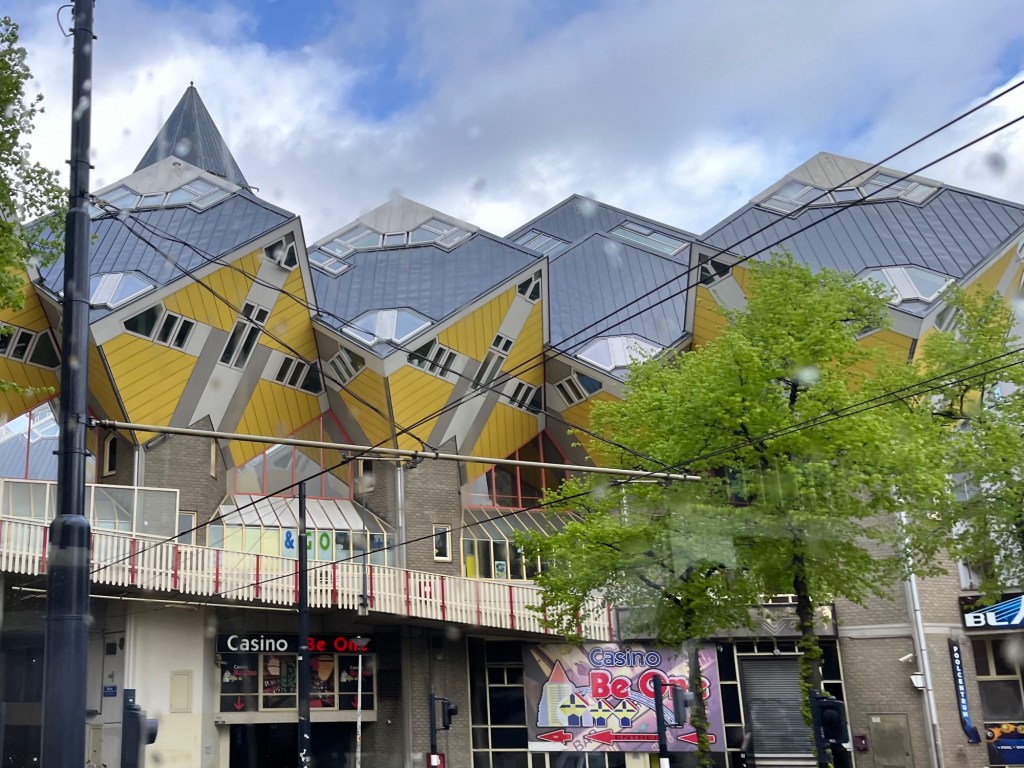
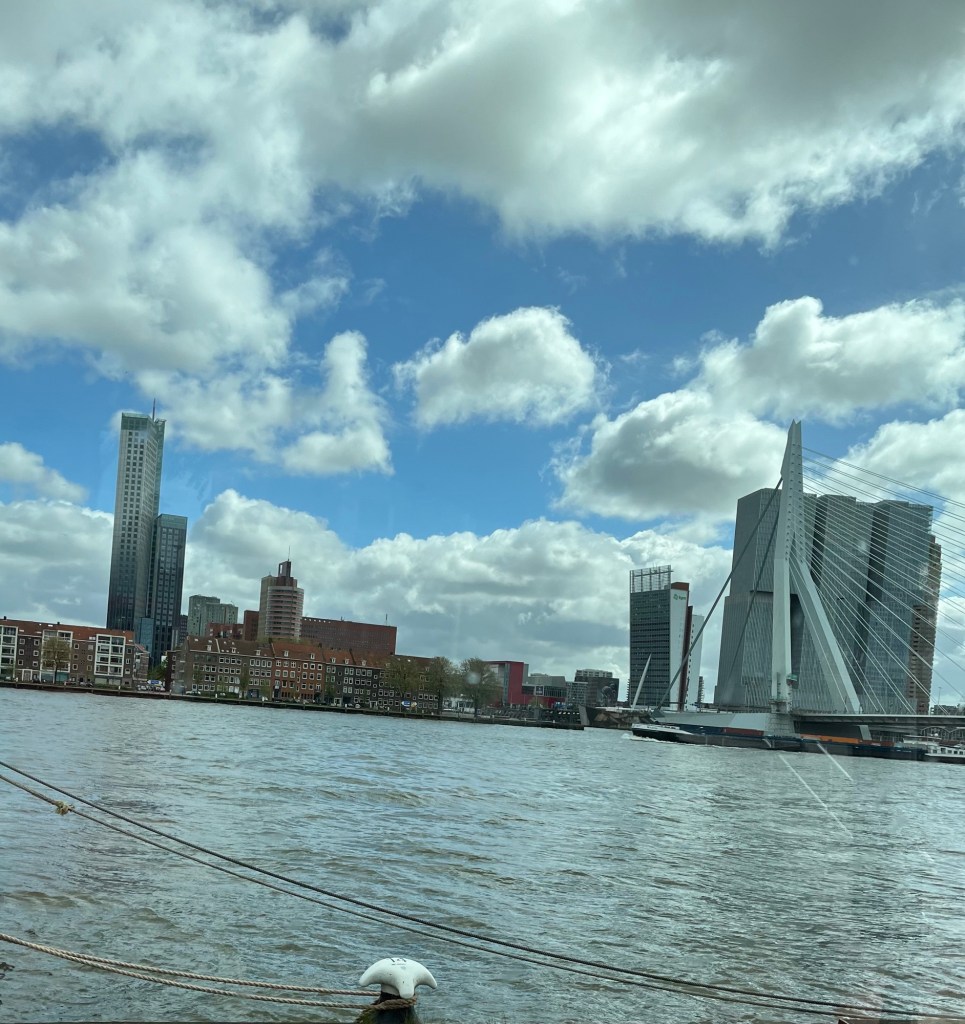
Rotterdam city center was bombed and largely destroyed during WWII. Apparently the city had agreed to Nazi occupation but the planes carrying bombs didn’t get the message in time so they bombed the city. As a result, the center city is new and very modern. Some bridges and houses are very unusual. It’s an interesting contrast where old and very modern are close together. We saw this as we left the city for Delft.
Delft is a famous city for many reasons. The Delft porcelain pieces have been known and prized for centuries. Anton Von Leeuwenhoek made the first microscope while living in Delft and saw “little animals” that were before unknown. Vermeer lived and painted in Delft. The technical university of Delft is a highly respected place for science training. The royal family lives in Delft. IKEA is headquartered in Delft.
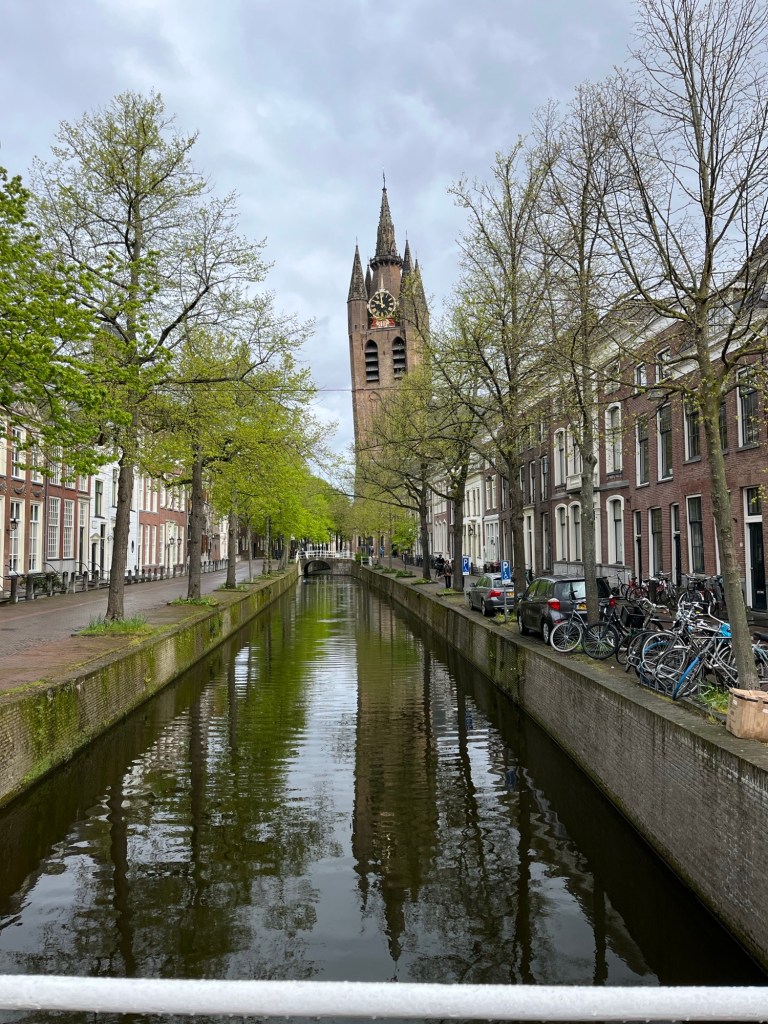
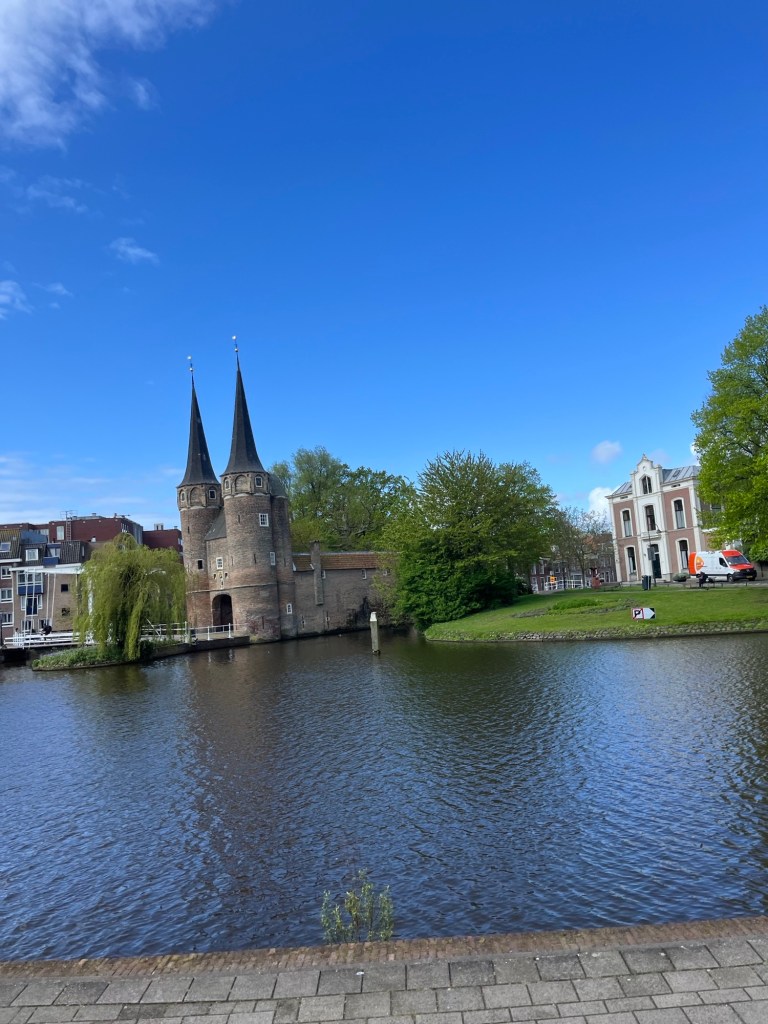
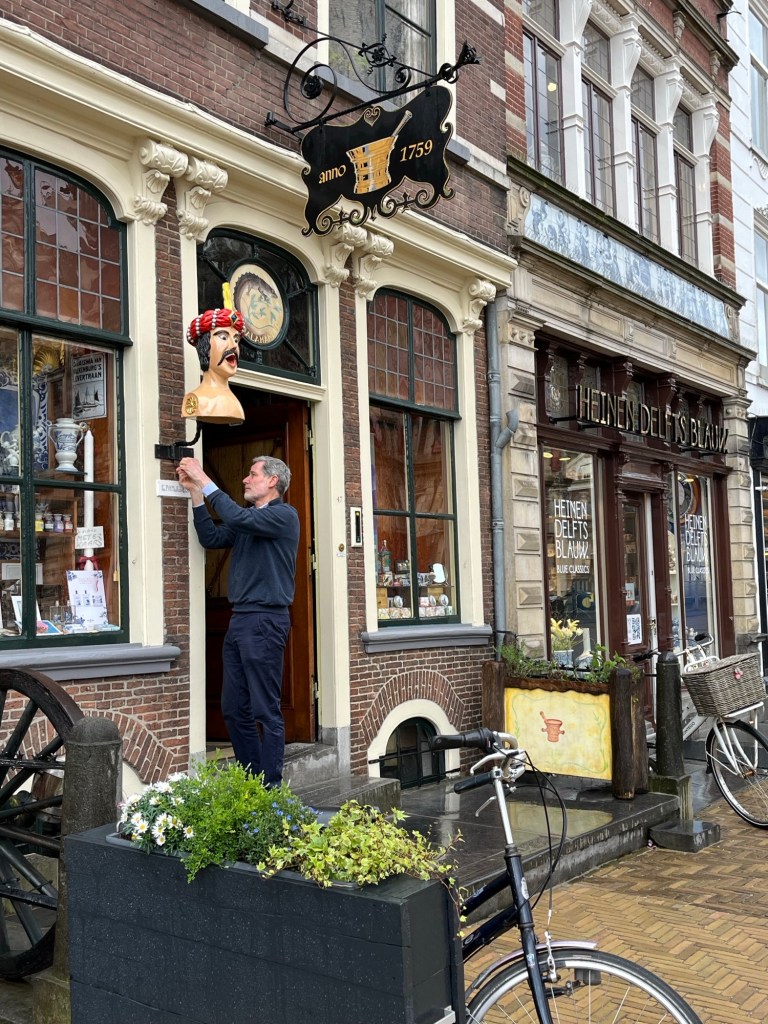
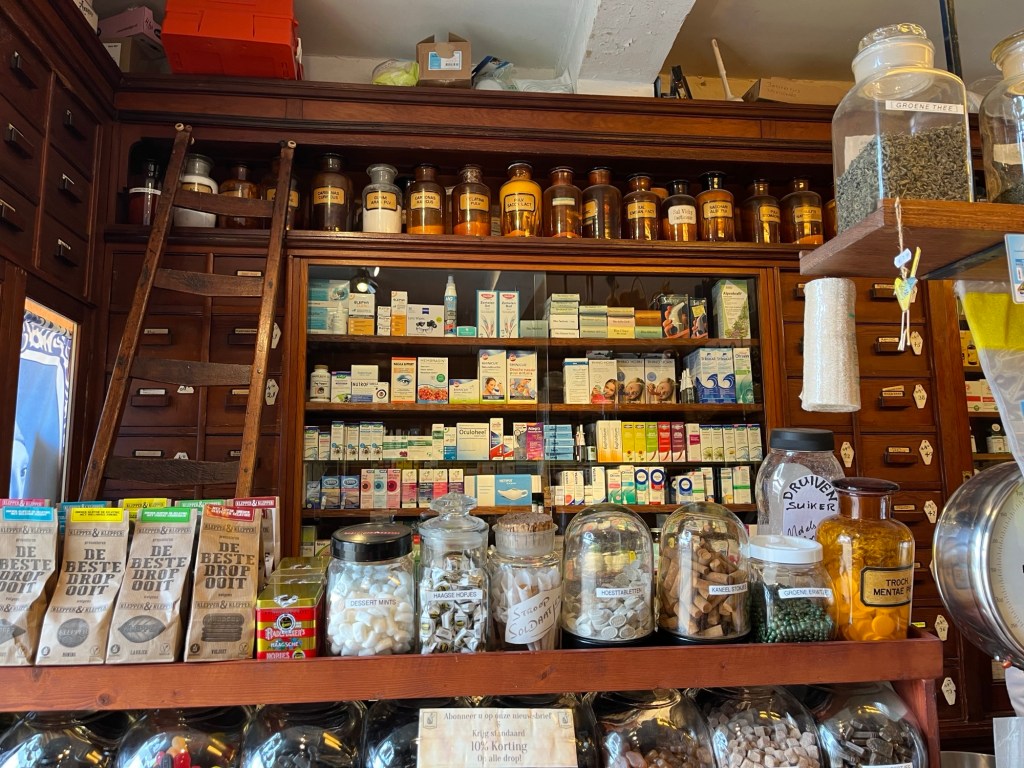
The city itself is small and quite charming. We walked into the town square to see some buildings that retained some old facades. There was an apothecary that sold many types of licorice. I bought some. A few old houses also had beautiful facades. A cheese shop had tasting for various flavors of Gouda and packaged cheese to travel. It didn’t rain so we enjoyed the walking tour.
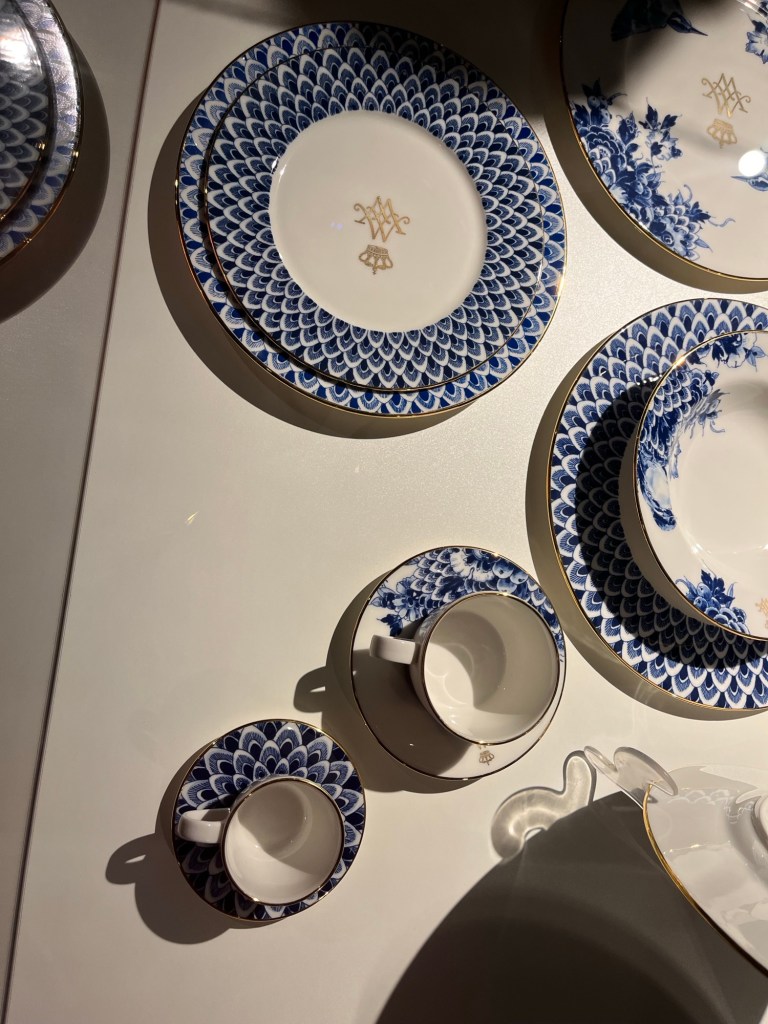
Next we visited the Delft factory and learned the history. It’s easy to think that blue and white dishes originated in Delft but they were actually earthenware copies of Chinese porcelains that had been brought back in trading ships. The first copies were easy to spot because they didn’t have the fine edges that can be achieved with porcelain and often the red clay showed through. Also the faces of the people didn’t look Asian as the original Chinese portraits. Once the Dutch learned the mix for fine porcelain, they began to make their own beautiful pieces.
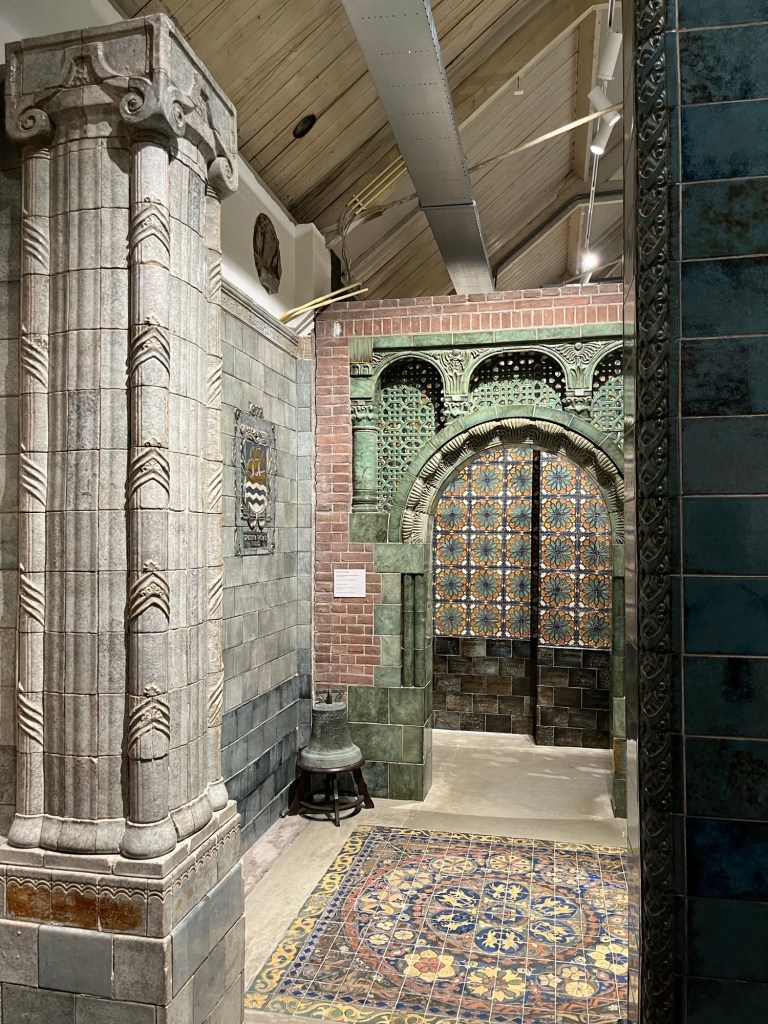
The company went through a difficult period when dinnerware was not sought after so they made ceramic tiles and walls. All was displayed in their private museum.
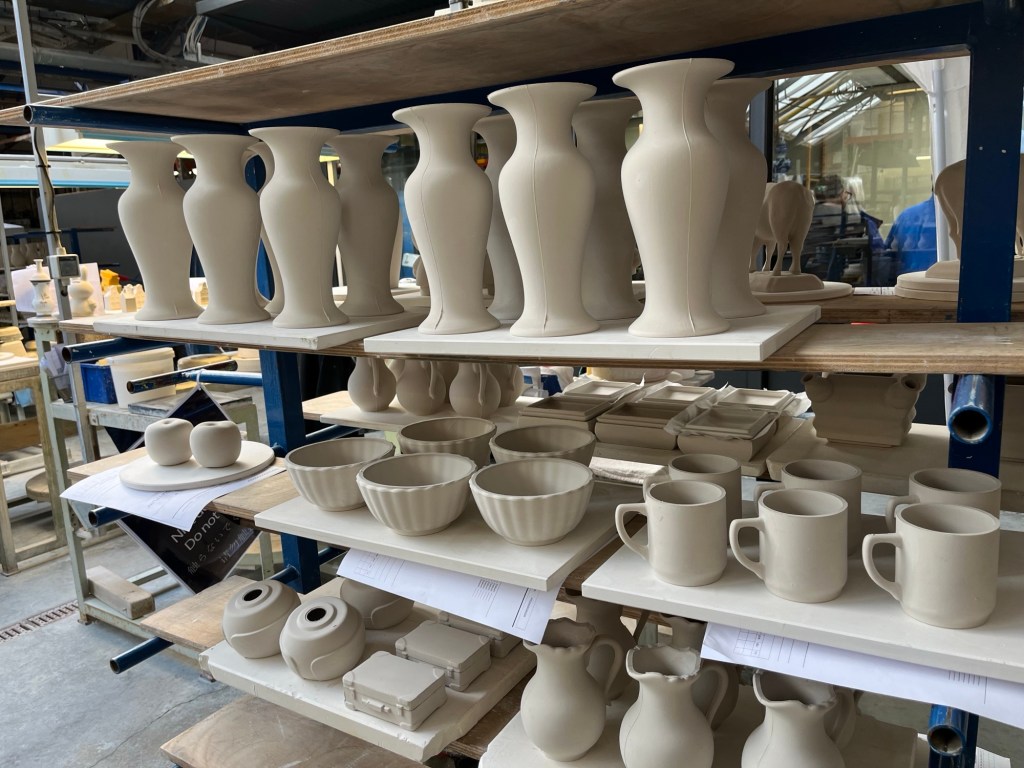
We were shown the different pieces that are formed in a mold, dried, fired, glazed, painted, fired and sold. Hand painted pieces are quite expensive but they have fine details that aren’t possible in production pieces. Nevertheless, I wasn’t tempted.
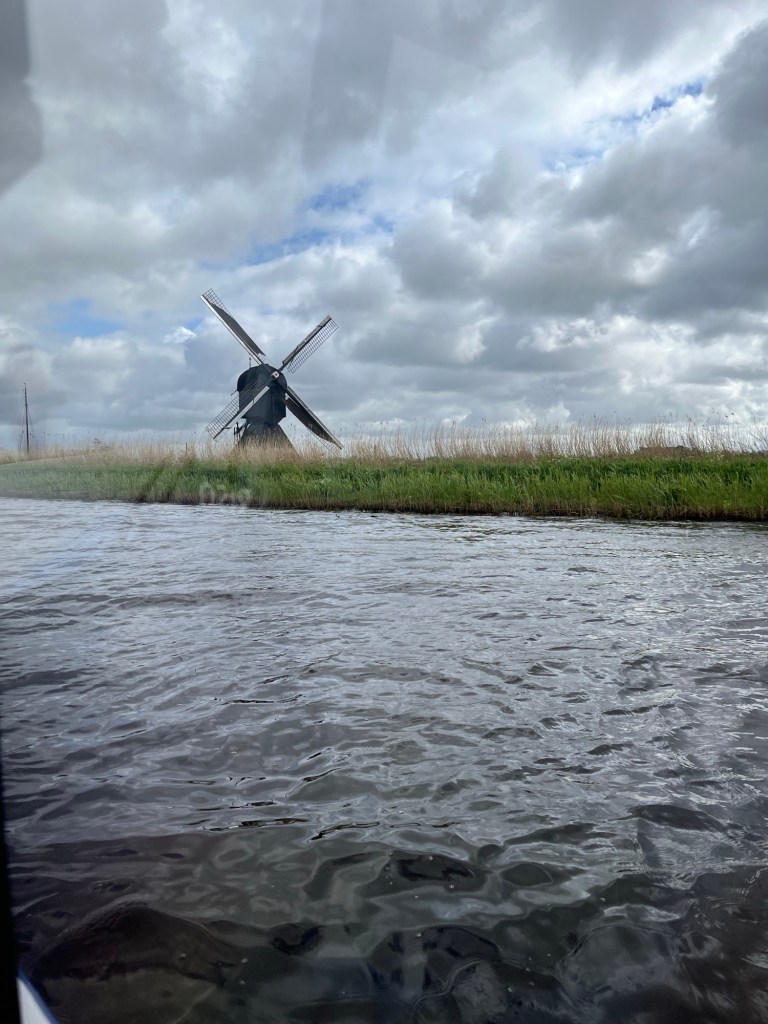
In the afternoon, we went to see the old working windmills of Kinderdijk. There are several hundred old windmills in the Netherlands that still pump water although the actual work is done by electric mills while the old ones are for backup and tourist visits. We traveled by boat down a canal lined with about a dozen windmills. Our guide explained the different constructions which represented different eras. These windmills are from the 1800’s and still functioning.
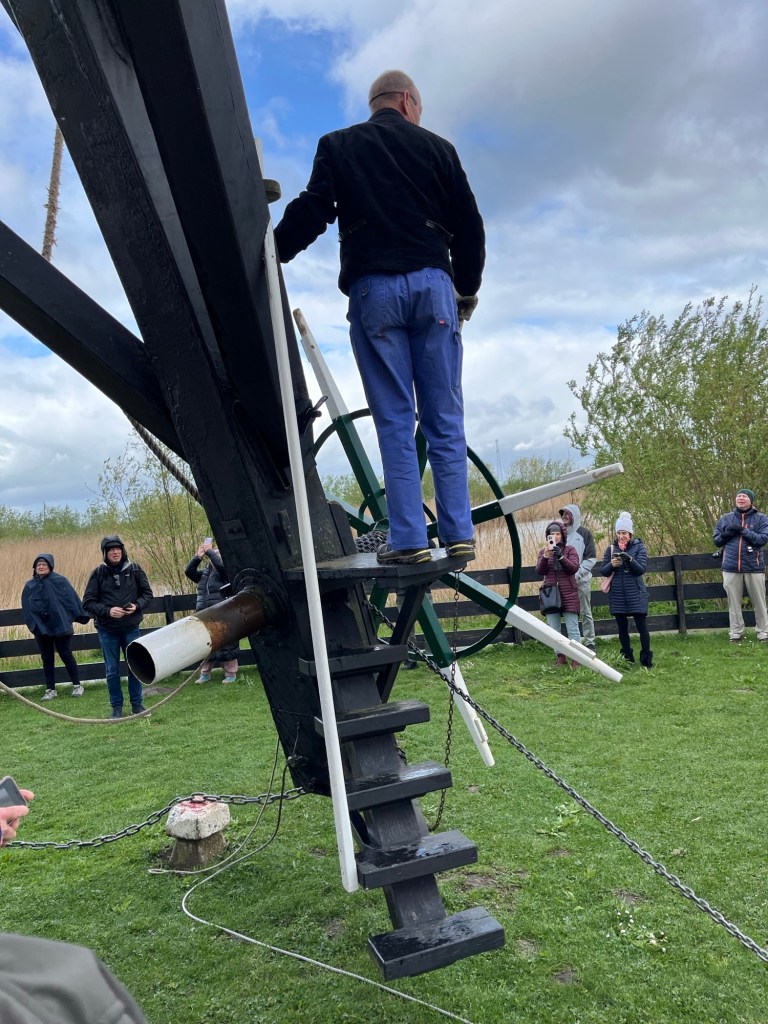
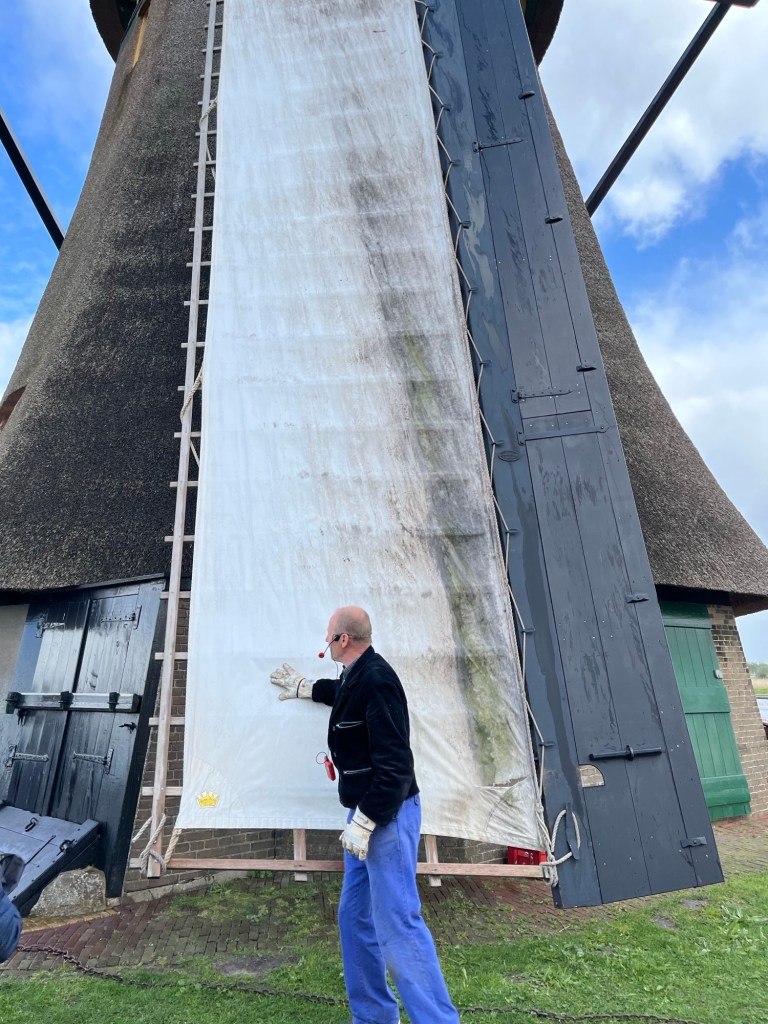
We were greeted by a miller who is a retired journalist who decided to do the work as a volunteer. Other millers along the canal live and work there permanently. The full time millers live in small houses on the edge of the canal. In times past, families lived inside the windmills. It was surely noisy and not warm. Since the vanes of the windmills needed to be adjusted for wind direction, each mill had 2 doors for entry and exit depending on the blade’s movement. The miller first showed us the inner workings (it began to rain), and after the shower ended we saw the great effort it took to move the top and blades to suit the wind direction. We also saw the fabric covering used on 2 or 4 blades to catch more wind. The covering needs to be folded up when the mill isn’t in use. The miller climbs the rungs of the blade to remove the attachments and fold the cover. In the past, millers were paid a meager amount and allowed to catch fish in the canals for their own use and for sale. It was a tough life. Now they are paid by the government to work and maintain the mills for tourism and as backups for problems with the existing system.
It is quite amazing to think that so much of The Netherlands is actually below sea level and reclaimed land. They certainly understand water management.
 The Adventures of Anne
Quite a trip you are having. Do you love the Netherlands
Gail Garlick Good Design 784 Park Avenue NYC NY 10021
212 570 9914 http://www.gooddesignshop.com info@gooddesignshop.com http://www.gooddesignshop.com/blog/
LikeLike