Our morning trip took us to the major biological producer of sea salt. The ancient technique is to bring sea water by pumps into an area that is enclosed to allow impurities to settle. After a defined period determined by the master salt maker, the water is channeled into next salt pan to increase salinity. Fish and brine shrimp exist in these area. Flamingos come to eat the brine shrimp. As sun and wind cause evaporation, a delicate top layer of salt called flour de sel forms. It is collected by skimming it from the water. Water is channeled to a third area for the final drying/evaporation. This sea salt is pure and contains some minerals in the salt like iodine, magnesium and iron.
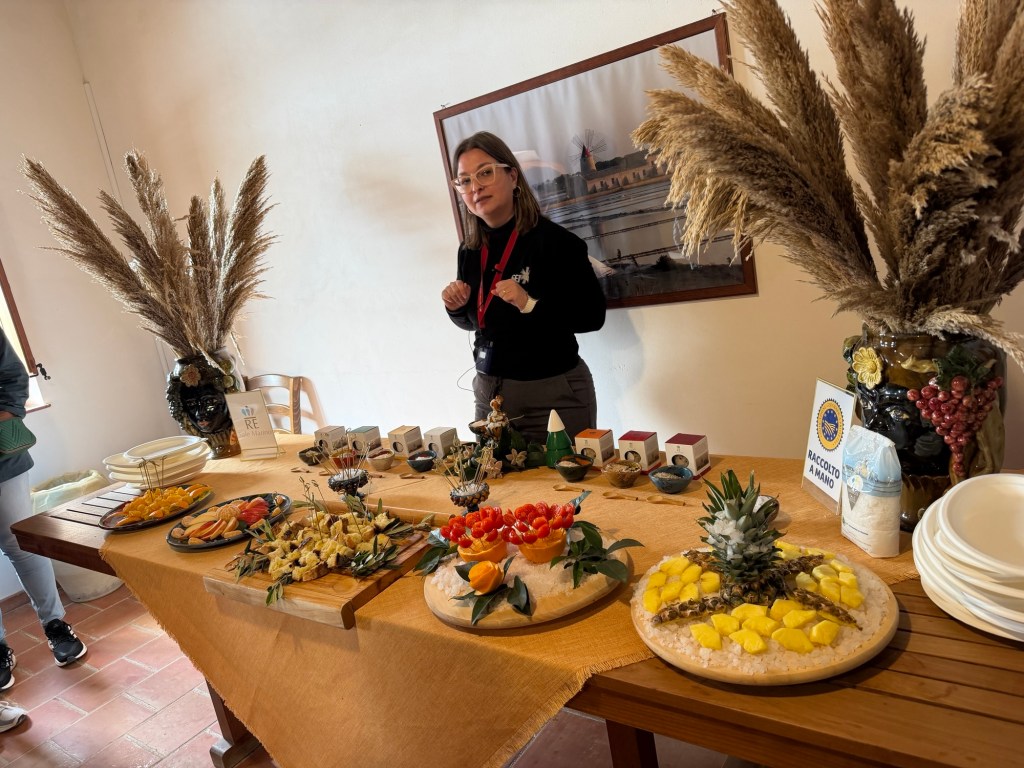
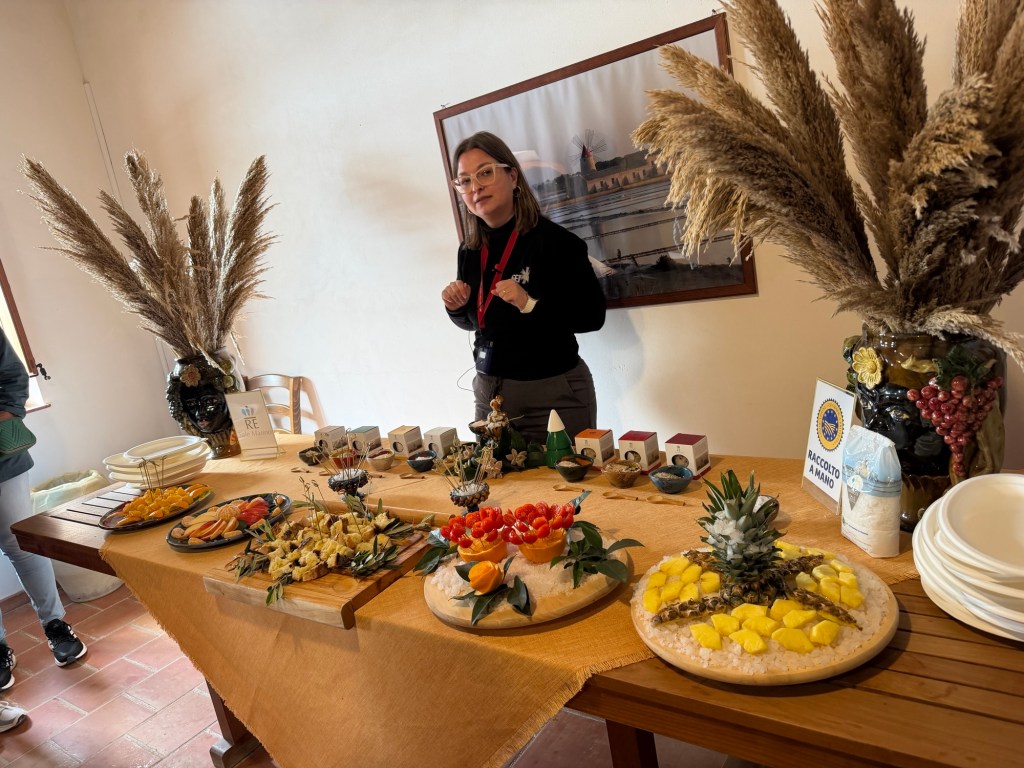
After we learned about the process, we were shown an ancient salt grinder that was powered by a windmill. It requires putting sails on the arms of the mill to match the prevailing winds. Most salt is now ground elsewhere. Next we had a “salt tasting “. It sounded crazy but it was interesting…also a bit of marketing. First we tasted a small bit of flour de sel. It wasn’t very salty. Just a nice light flavor. Next we took plates for slices of fruit or bread that were to be used to taste various herb or citrus flavored salts. It was interesting and unusual. I have never thought to put salt on a slice of apple or orange or pineapple. It’s not really something I would do again. The plain sea salt and flour de sel were fine!
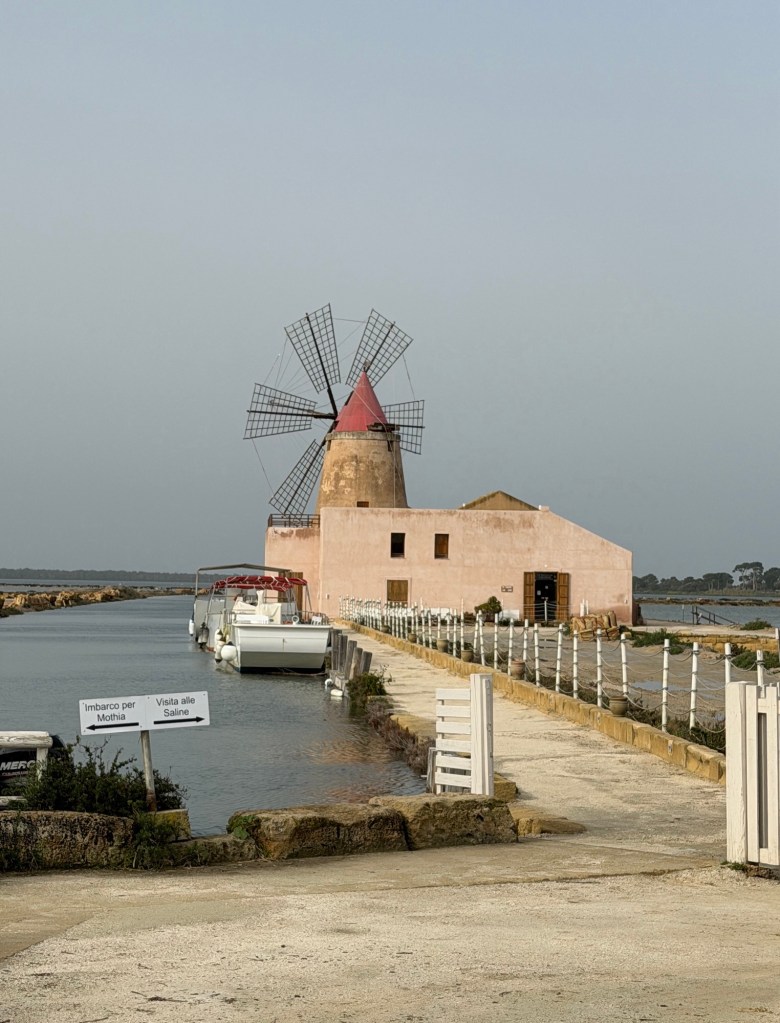
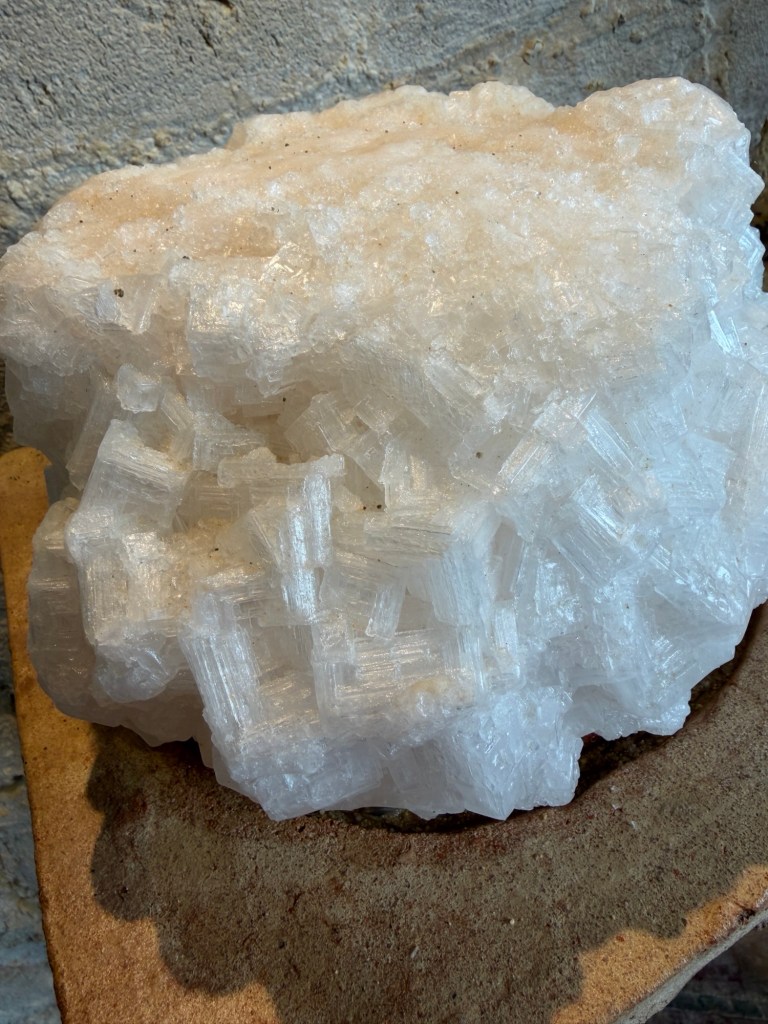
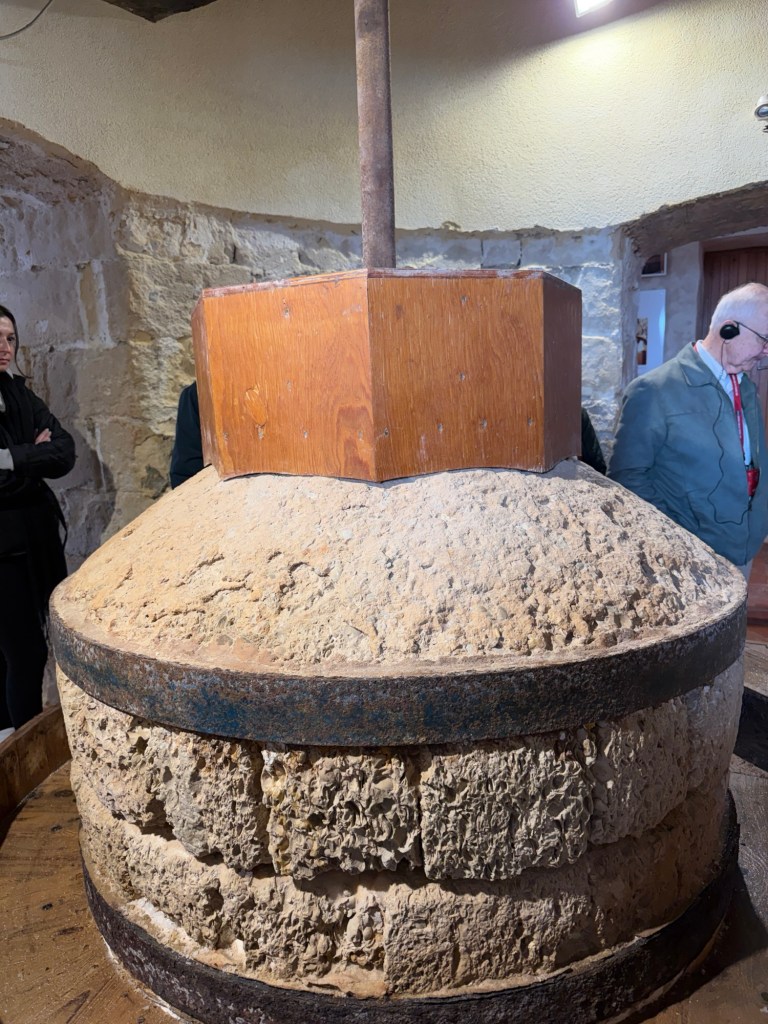
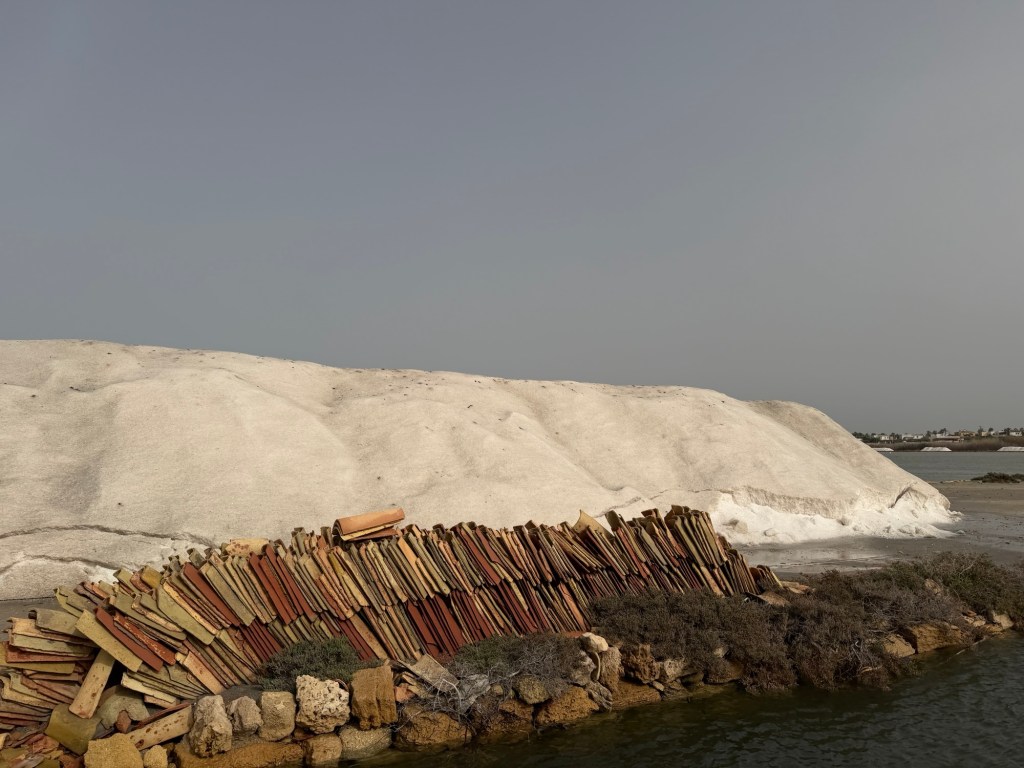
The salt is raked and shoveled into wheelbarrows then piled up and held waiting for processing. It is covered by red roof tiles to protect it from the weather.
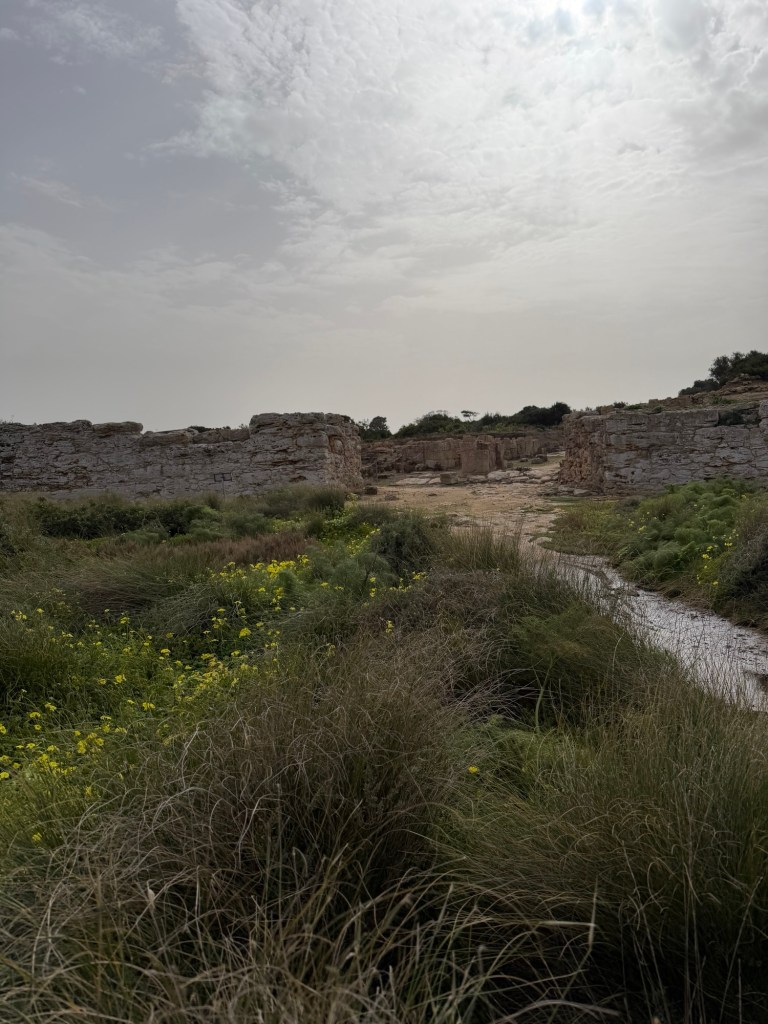
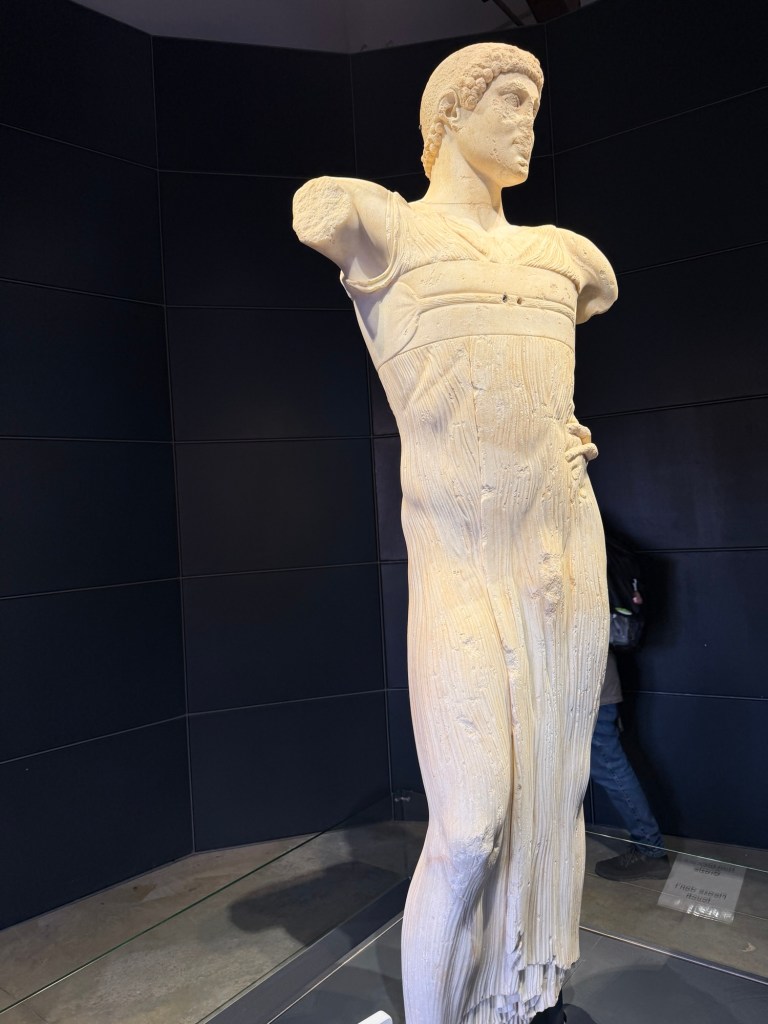
Our next outing was a boat ride across the shallow lagoon to the island of Mothya(Motzia)…spelling is variable. The island was an extremely early outpost of the Phoenicians around 800 BC. As in much of Sicily, there were wars for control including Greeks and British invaders. The island was purchased by Giuseppe Whitaker in the early 19th century. He was a wealthy businessman who had a passion for archeology. He began excavating parts of the island finding many walls, artifacts and a beautiful marble statue. He began a private foundation which houses the collection and continues to work in the island today with the cooperation of Italian archaeological experts. We had a light vegetarian lunch. Then we took a walk through the vineyards, olive groves and around the perimeter to see some archaeological dig sites. Luckily it was fairly warm today but very windy. We were told that this area is one of the premier kite surfing areas in the world!
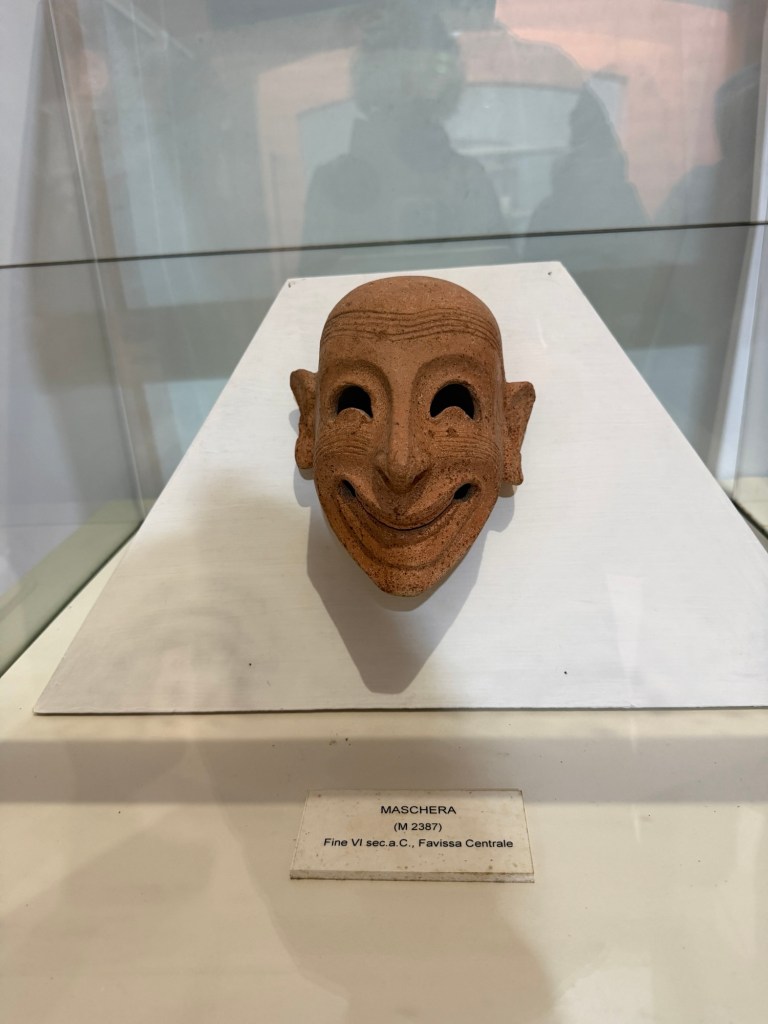
We returned to the land and our bus. A few of us went to the archaeological museum to see 3 large boat fragments found in the shallow waters near Marsala. One was dated from the Punic wars. There is so much history here that is buried in the sea.
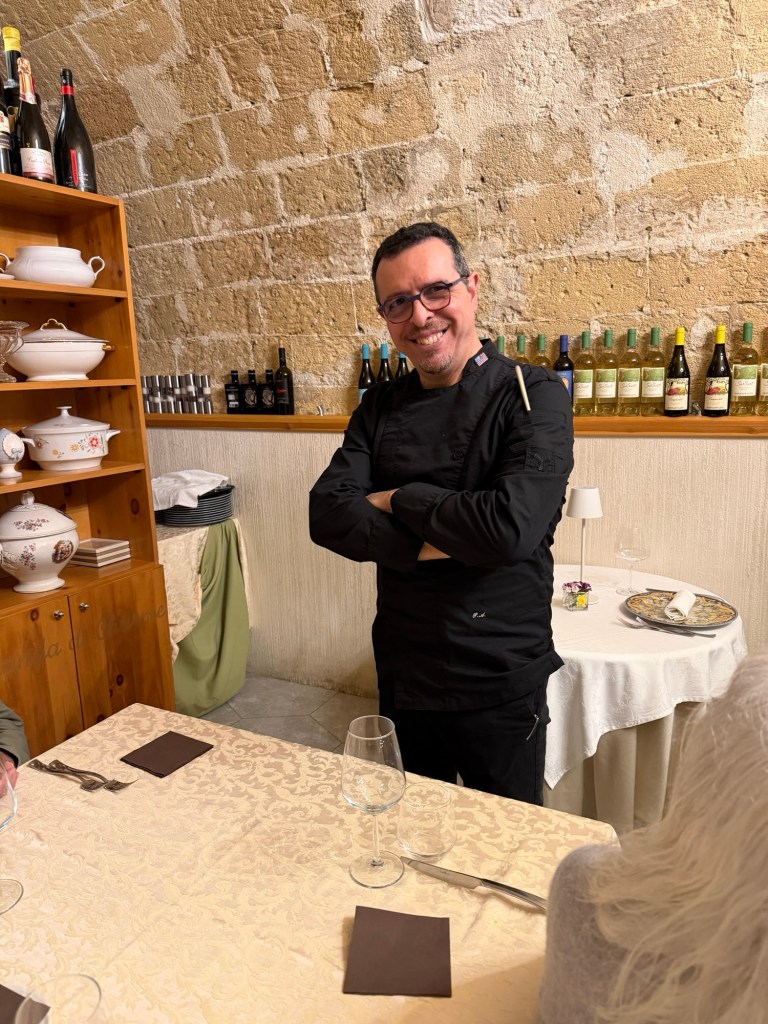
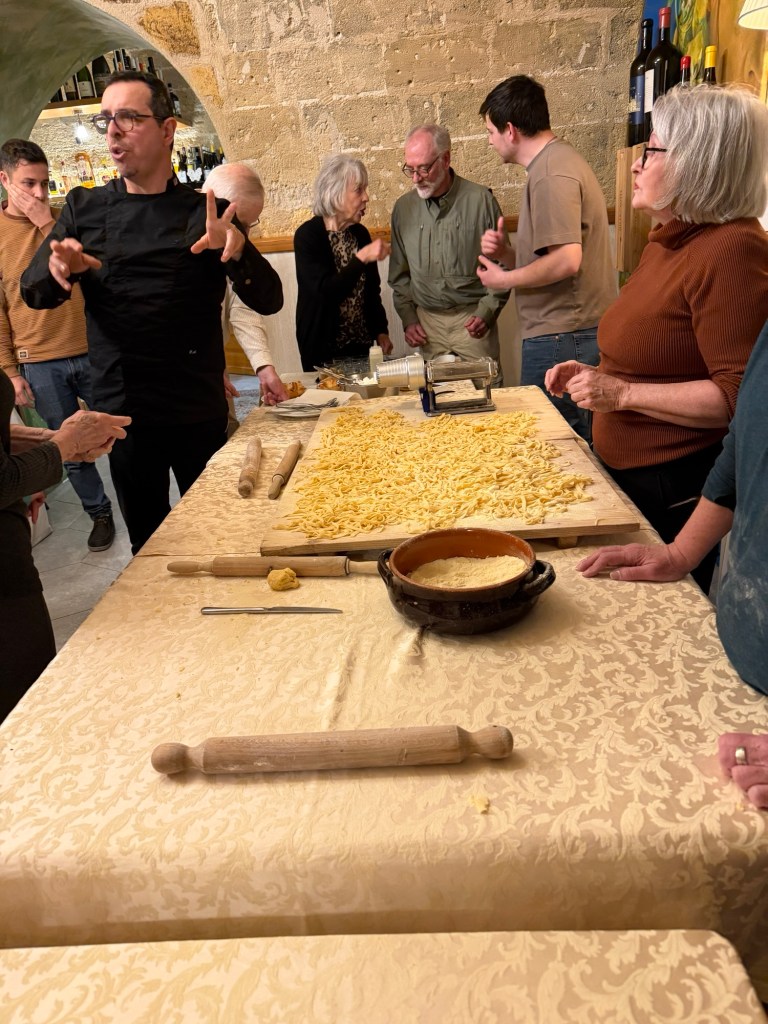
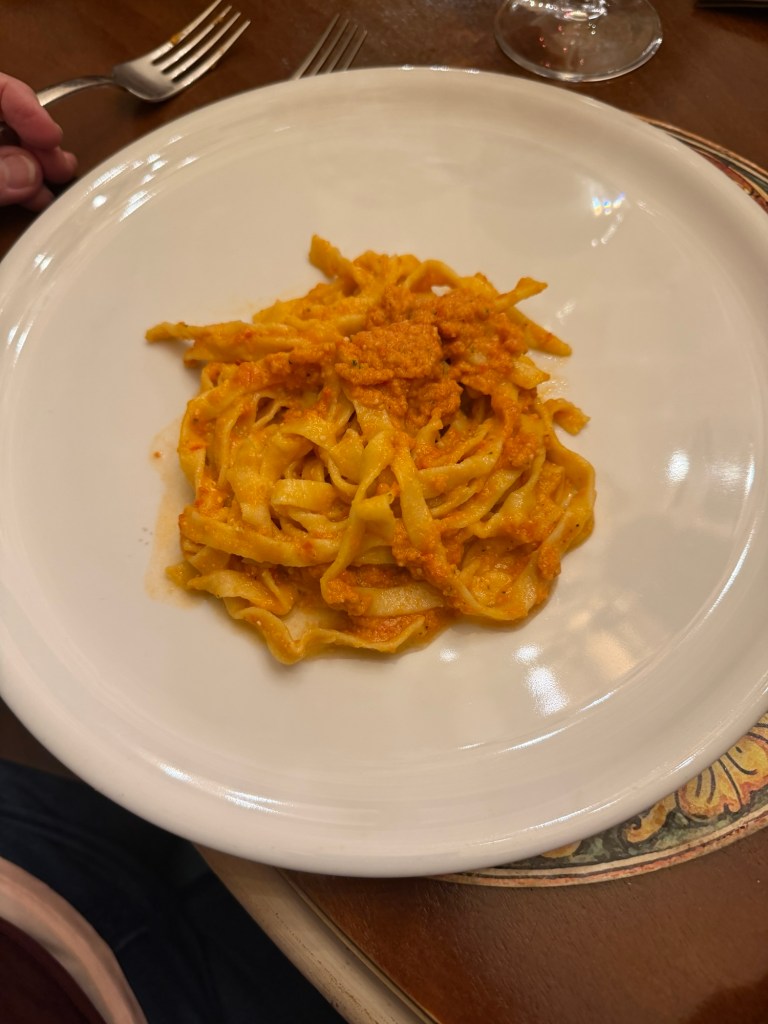
We returned to our hotel for a bit before dinner. Tonight we did a cooking class to make our dinner. We made fresh pasta, sauce, eggplant cups with cheese and almond dessert. It was great fun. Our group was divided into teams to make each of the parts of dinner. We ate well.
Tomorrow we leave for our next destination. I have added the map of our entire Sicily trip so that it is possible to follow our route.
 The Adventures of Anne