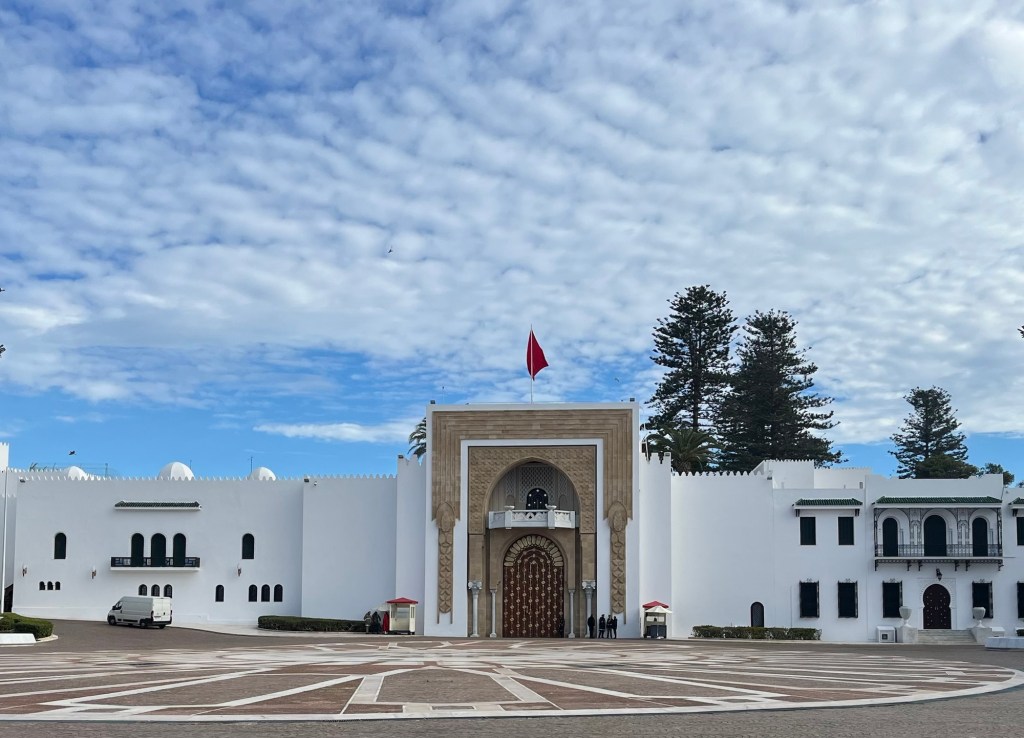
We drove in our comfortable small bus for 1 ½ hours north to the Mediterranean coastal town of Tetouan. This city has an old core area (16th century) with a Kasbah (military fortification for the ruling family) and a medina (walled city for the general population) attached to it. However, the rest of the city was built in the 1920’s when Spain controlled this region of Morocco. So the newer section of the city has a heavy southern European look – wide streets meeting at circular plazas, white European style buildings with a hint of Moor or Arabic architecture. We started our adventure walking in this newer area. It was Sunday so things were slower – which was nice.
The first interesting shop we stopped at was a dress shop for formal dresses like would be worn at a wedding or very fancy party. We learned that unless you are very rich, you would rent the dress from a shop like the one we stopped at. The woman in the shop explained to us that all of the dresses are very long by western standards. The “train” on them was at least 6 inches that dragged on the floor. So you had to hold them up to walk. The fabrics were beautiful colors with lots of embroidery. We learned what differentiated a less expensive dress from a very expensive dress. Generally, it had to do with whether the stitching and embroidery was done by machine or by hand, and how much embroidery there was. The shop also rented jewelry to go with the dress. So that was all quite interesting.

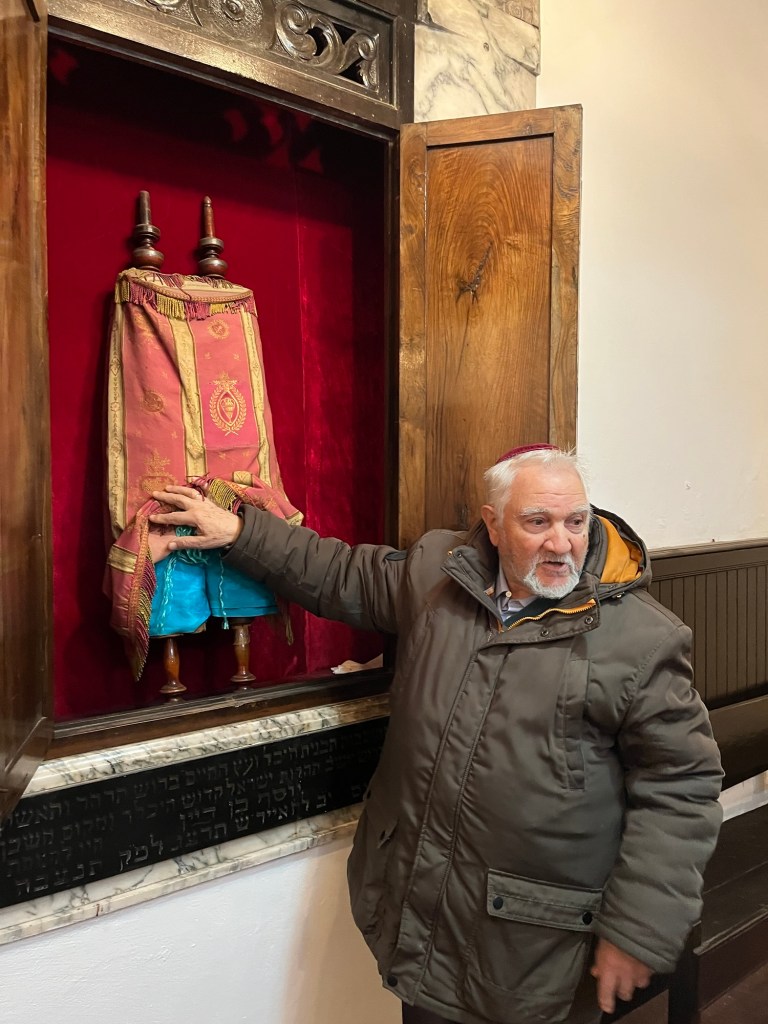
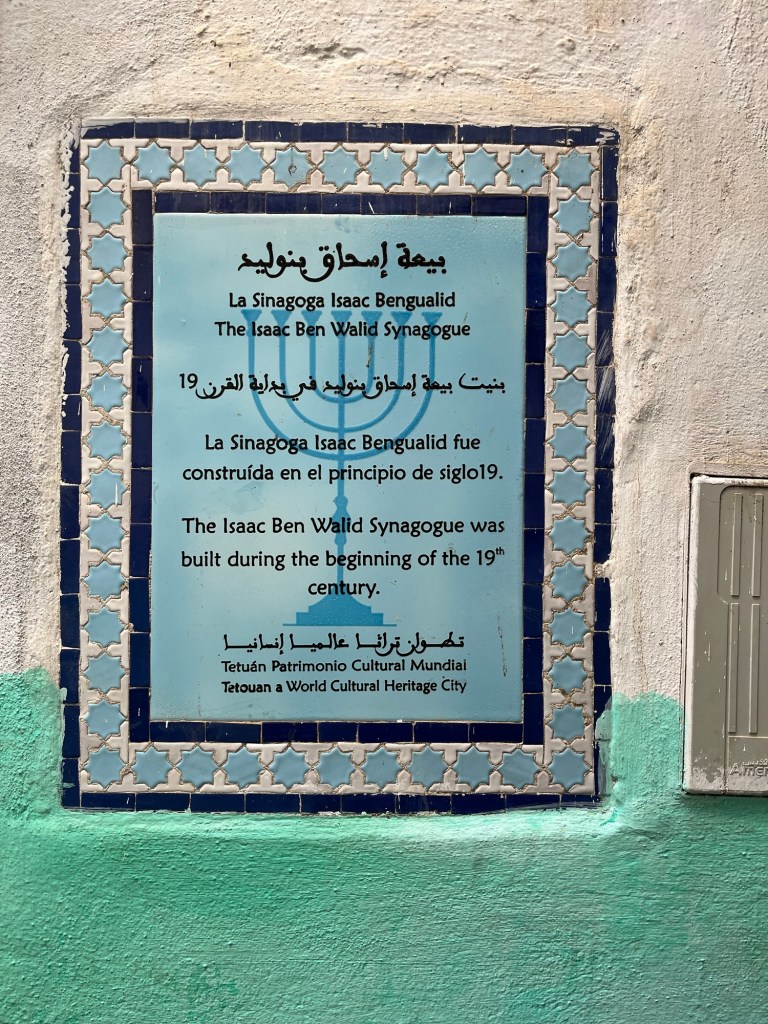
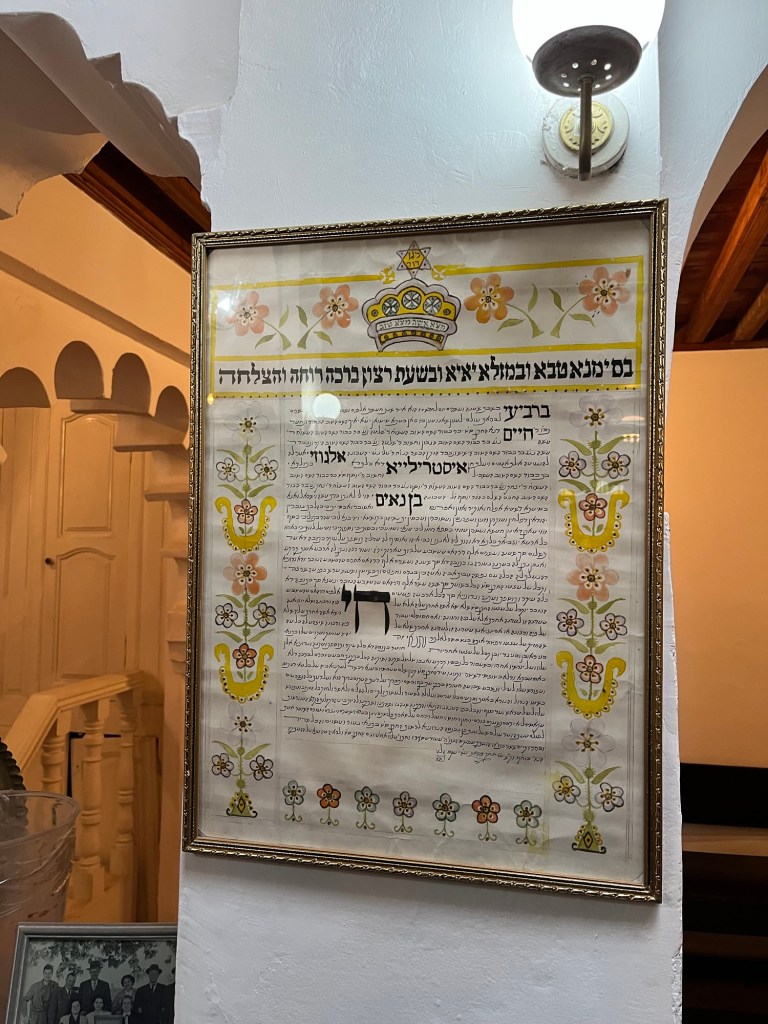
Then we walked through the medina – the old city within the city wall with narrow streets and small homes and shops. We stopped at several shops that caught our interest. One was a bakery where we all had some pastries we had not seen before. Another was a carpentry shop where a craftsman and his workers were building custom wooden furniture that had a lot of inlays and hand carvings. I was particularly interested in this being a woodworker. We also stopped in an area where men were sewing garments with only had stitching. They said it took them 4 days to do one garment. If you wanted to order one, you had to visit 3 vendors. First you purchased the fabric from one vendor. Then you got measured by another vendor. Finally you gave the measurements and fabric to one of these vendors who will make the garment. The last stop in the medina was a synagogue. The keeper gave us a great orientation tour.

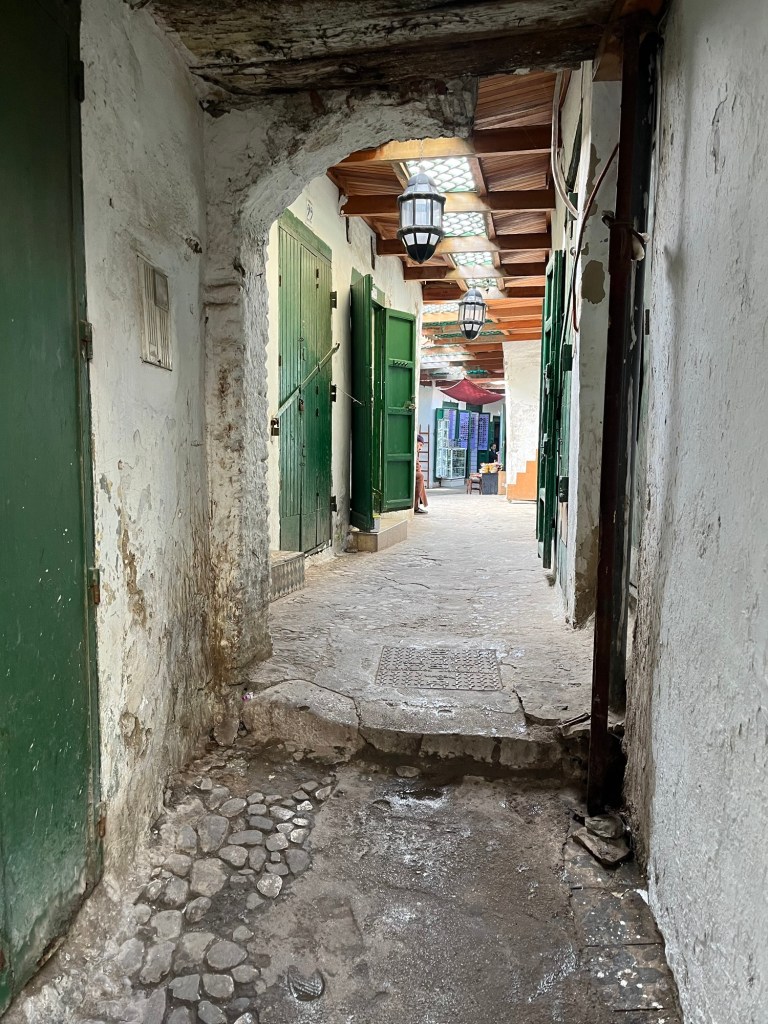
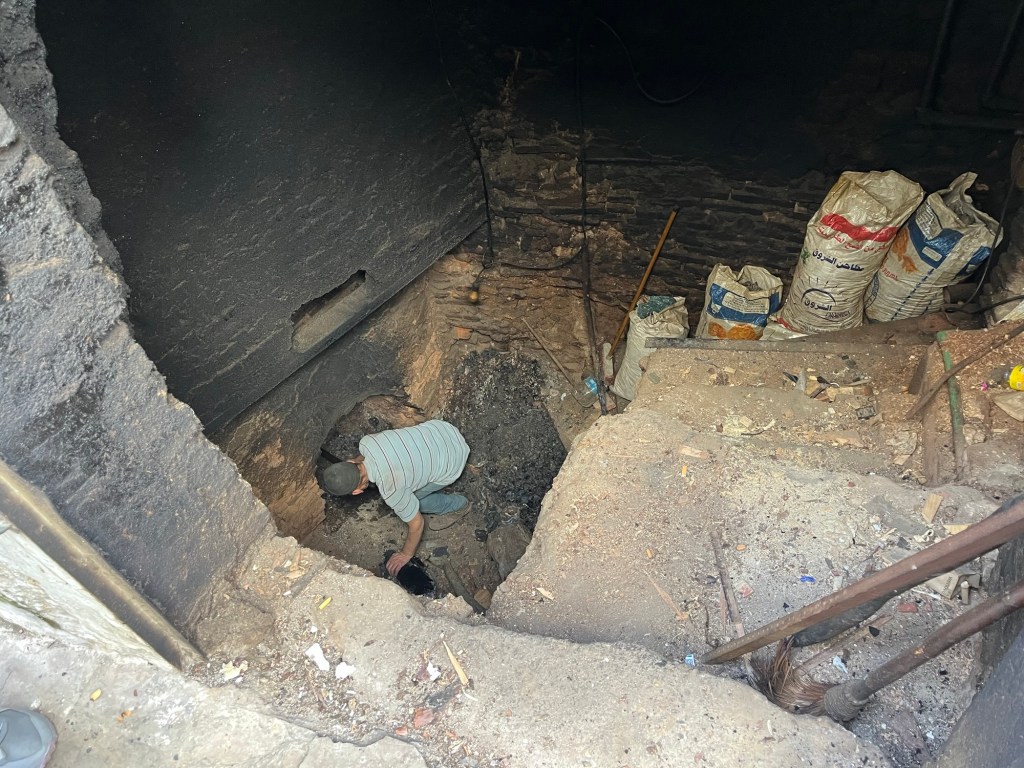
We went from the medina through a fortress gate into the kasbah. This kasbah had a couple interesting features. One was the original water system that supplied water to all the buildings was still working after over 400 years. It was a system of small aqueducts about 2 inches wide that ran through the interior of the thick masonry walls. There were small cabinet doors in the wall every 20 feet or so that you could open from the street side and draw the water you needed. This water is still used today for washing cloths and other non-drinking uses. Another interesting feature was furnaces that were well below the street level. They burned wood and supplied heat to the common bakery and the hot public bath. Since wood is scare, this was an efficient way to conserve resources. You make your bread at home, then bring it to the shared common oven to bake it.
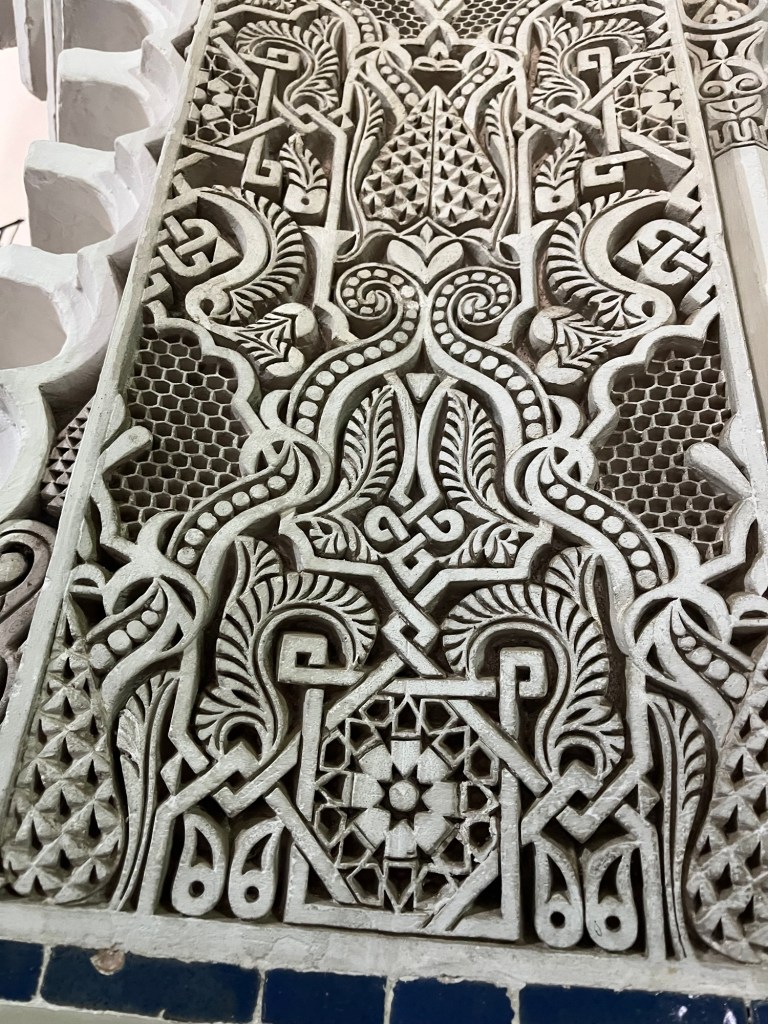
The last spot we visited was outside the kasbah and medina. It was a school for artisans that was built by the Spanish. There are 40 student in a four year program. Then learn how to create traditional designed and can pick from several mediums to do their work – ceramic/tile, brass/bronze, wood, plaster, etc. The workshops for each of the mediums were fascinating. We gained a great appreciation for what it takes to create these masterpiece works in the various mediums.
We left Tetouan and drove a short distance to the seaside resort area of Azla. We had a wonderful seafood lunch and walked on the beach a bit before leaving to drive through a national park in the Rif mountains.


When we got back to Chefchaouen, we went on a shopping trip with our guide, Abdu. Anne and I have found our most essential pieces of clothing are our long underwear. It is COLD here! It was particularly cold this morning as we got to Tetouan that was shrouded in a wet fog. Anne and I are concerned that even with all of our heaviest clothing, we’ll be cold in the desert. That’s why we went shopping for djellaba. These are full length pullover outerwear with a hood. You see them everywhere here in Morocco. We had a fun experience shopping for them. Anne and I found them very warm and cozy so we now set for the desert.

Our group had a fun, light dinner together at the place we are staying. A very nice day topped with a great evening!
 The Adventures of Anne