As we began to dress in our waterproof outerwear to get to Saunders island, we were notified that the surf in the landing area was too rough for our safety. But we were told that we could approach the island from the opposite side and still see the sights. It caused a 1 1/2 hour delay. It’s an expedition. Plans are always fluid.
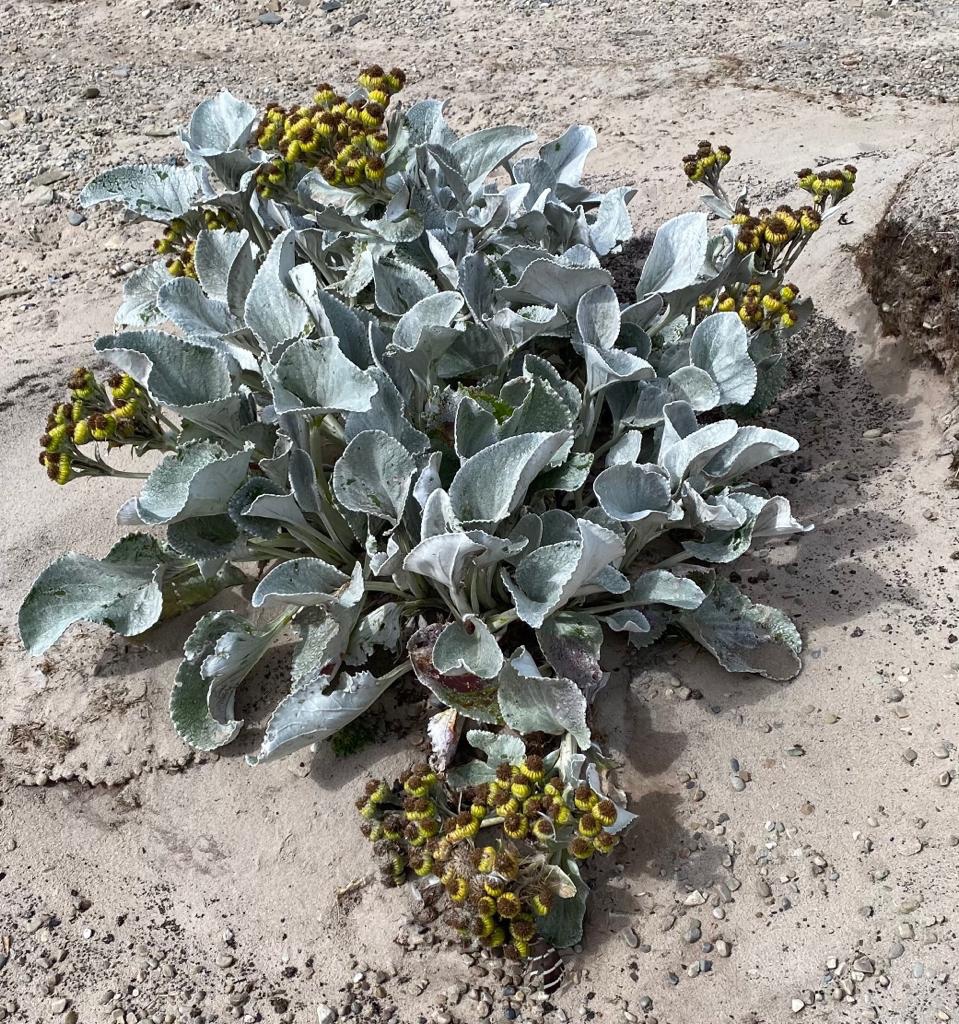
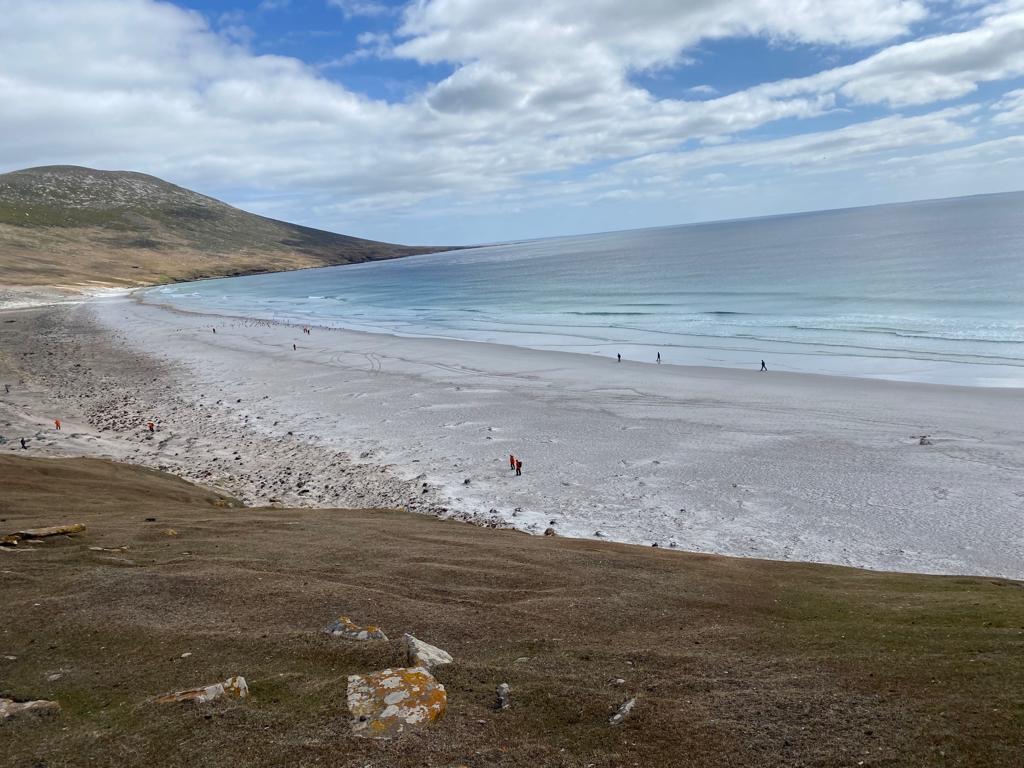
We did finally get to a beach that seemed like it was in the Caribbean with white sand and turquoise water. We walked a short distance to reach the area that had been our intended landing. There were many soft grey green leaved flowering plants that they called cabbage despite the fact that they are related to sunflowers.
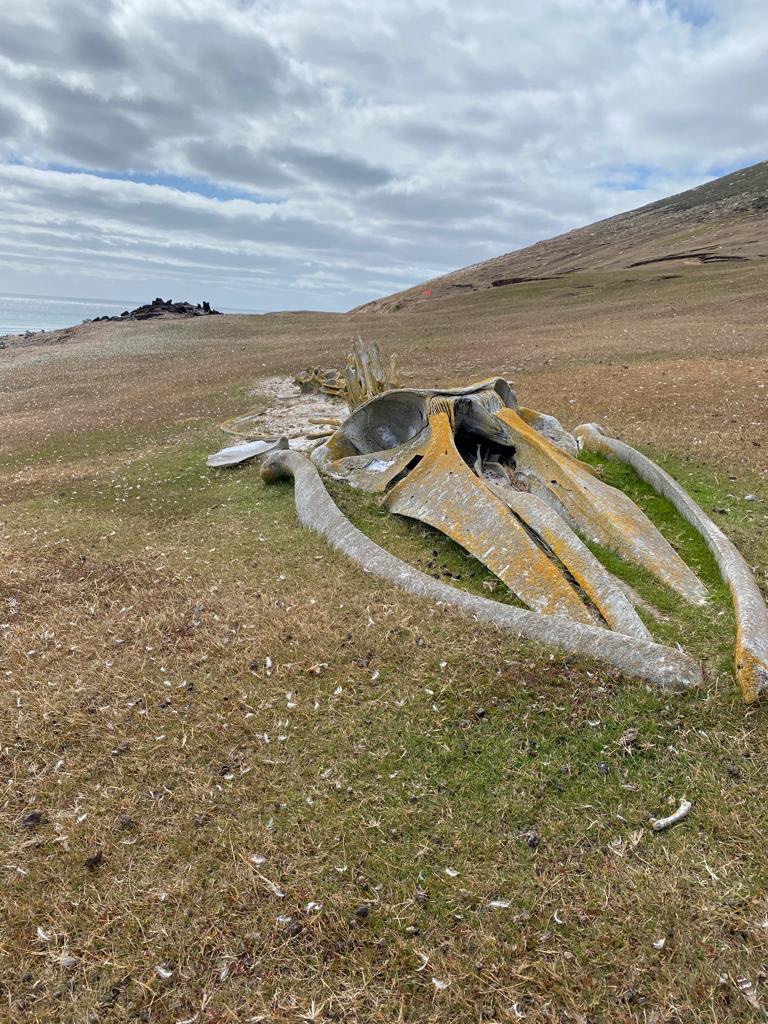
We passed a small beautiful lichen covered whale skeleton that we speculated was beached in a storm. I thought there were a few errant frisbee type items that on closer inspection turned out to be intervertebral discs.

As we approached the beach we found many birds flying near the cliffs. They were albatrosses and cormorants that in this area are called shags. They are slightly smaller than our northern cormorants and they appear to be much better at flying.
We climbed up to the cliff area we passed the burrows of Magellanic penguins. These penguins nest in areas where they scoop out dirt from the hillside and form a tunnel for their nest. Mark even managed to catch a photo of a curious chick who had emerged from the nest to look around. We often think these birds consider us to be large orange penguins. They have little concern for us being near but we give them space when they are molting which is apparently a stressful time since they are unable to swim and feed until their new feathers are established.
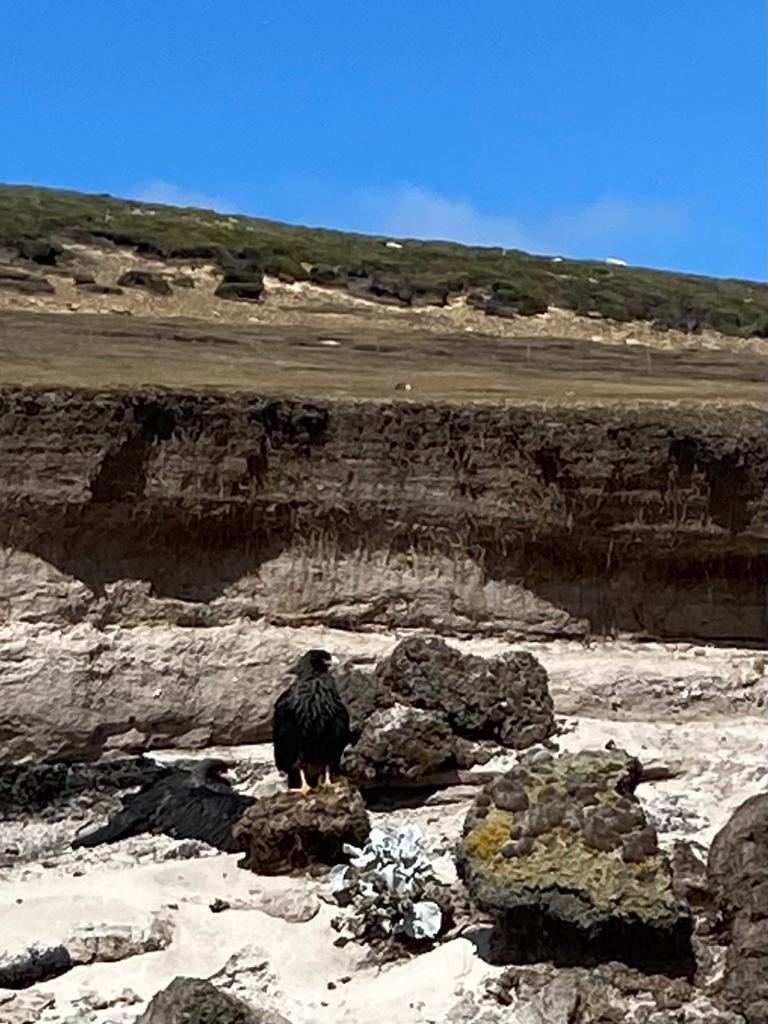
As we walked back towards our landing area we spotted a striated Caracara sitting on a low rock. These birds are hawks and they look very typical with the hooked beak. As I looked more closely, I noticed a second Caracara with wings spread out on the ground possibly covering a chick.

Jared, one of our naturalists, pointed out an interesting ground area that looked almost like a modern art work. It is actually penguin guano. The penguins face into the wind and turn slightly as the wind changes a bit. They leave an interesting pattern on the rocks.
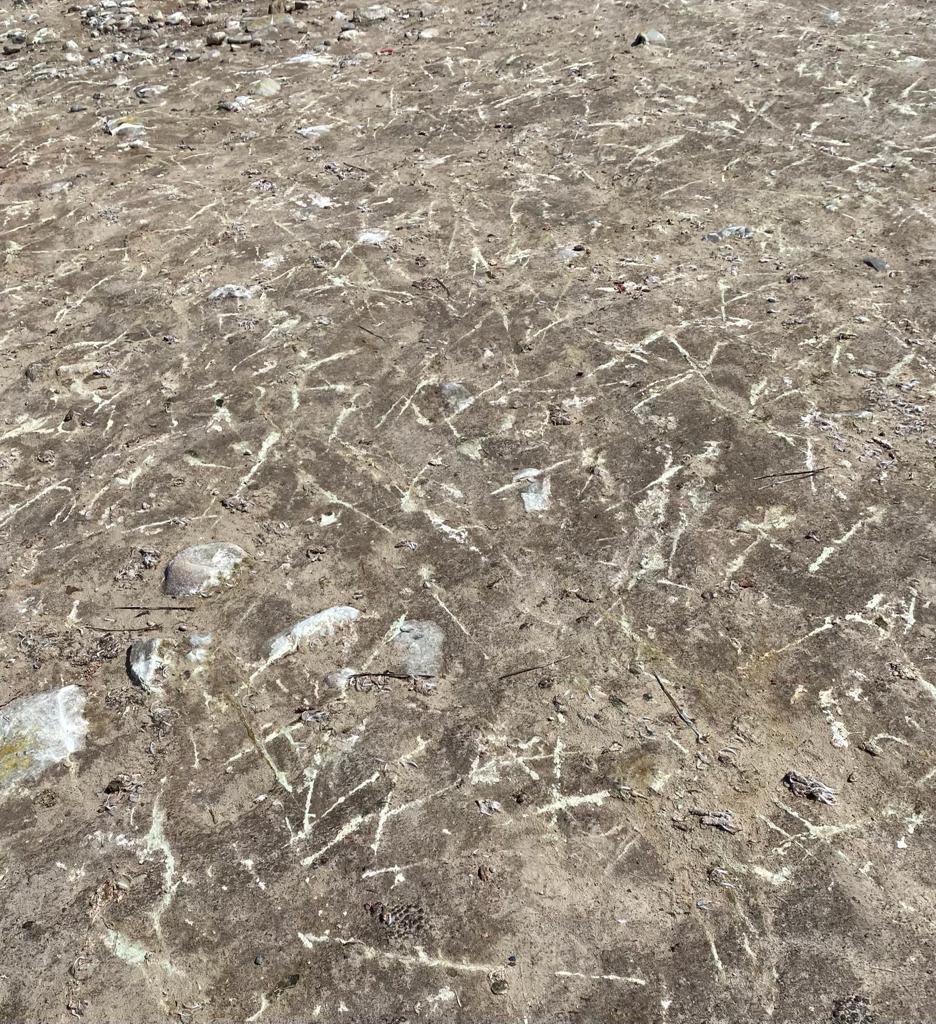

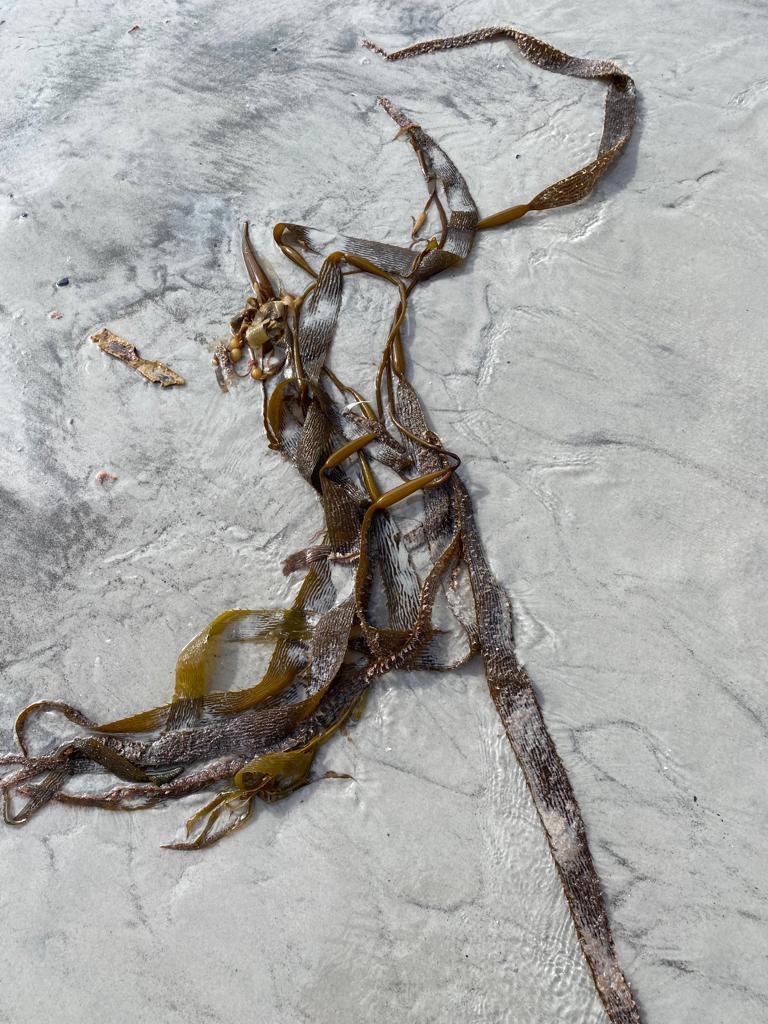
GUANO:bird excrement that covers the areas where birds nest or as they move across the land. Bev had read that there’s big money to be made in selling guano for fertilizer…but it’s hard work and the smell is nasty. We laugh about it but have decided against the business.
The afternoon was spent on Carcass Island.
We landed on a white sandy beach that was a nice spot for birds.

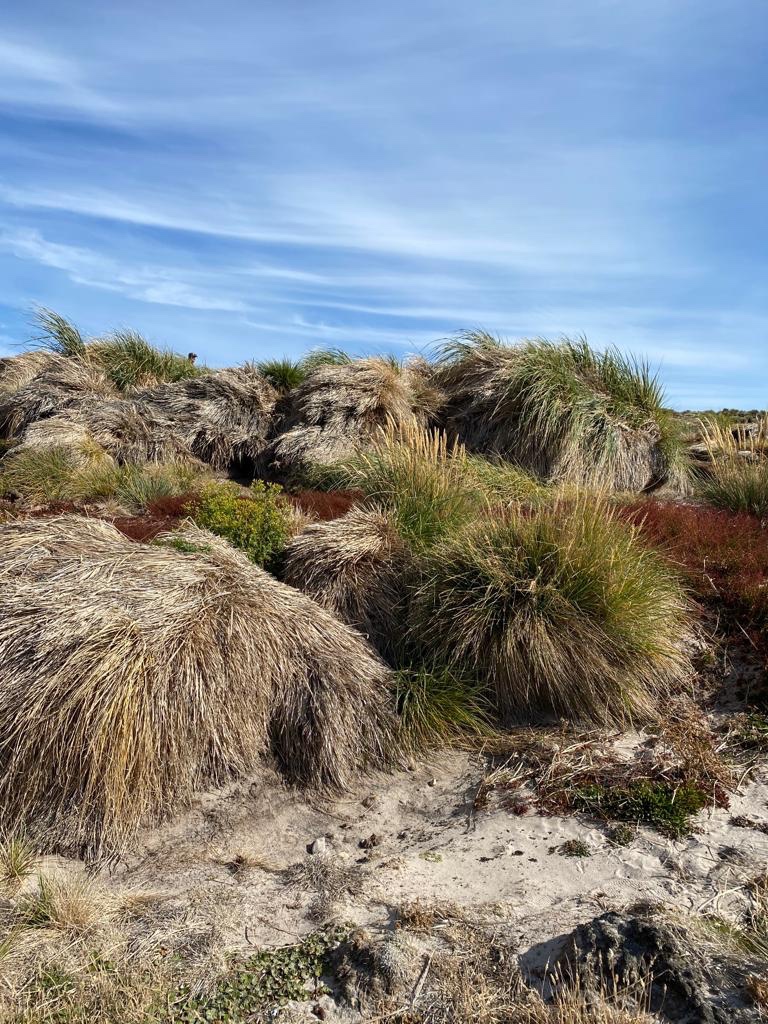
There were many tiny inquisitive dark birds, tussock birds, on the beach. Large dark Cara cara birds with sharp beaks sat on rocks and grass hillocks along the edge of the beach.
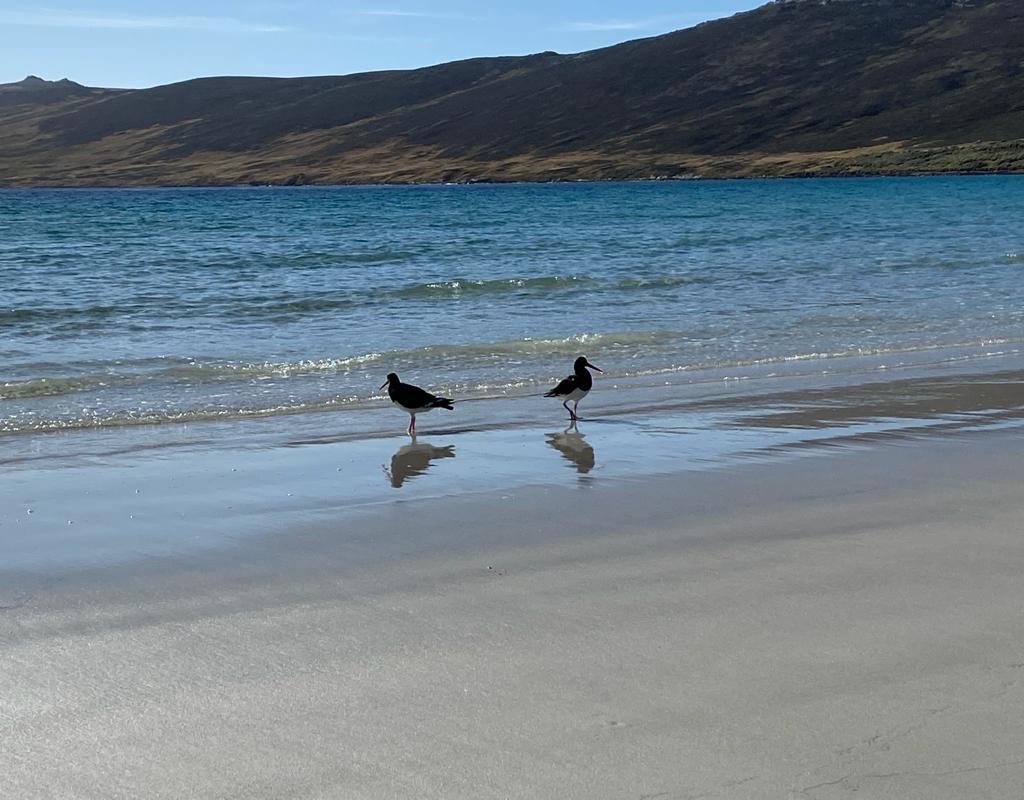
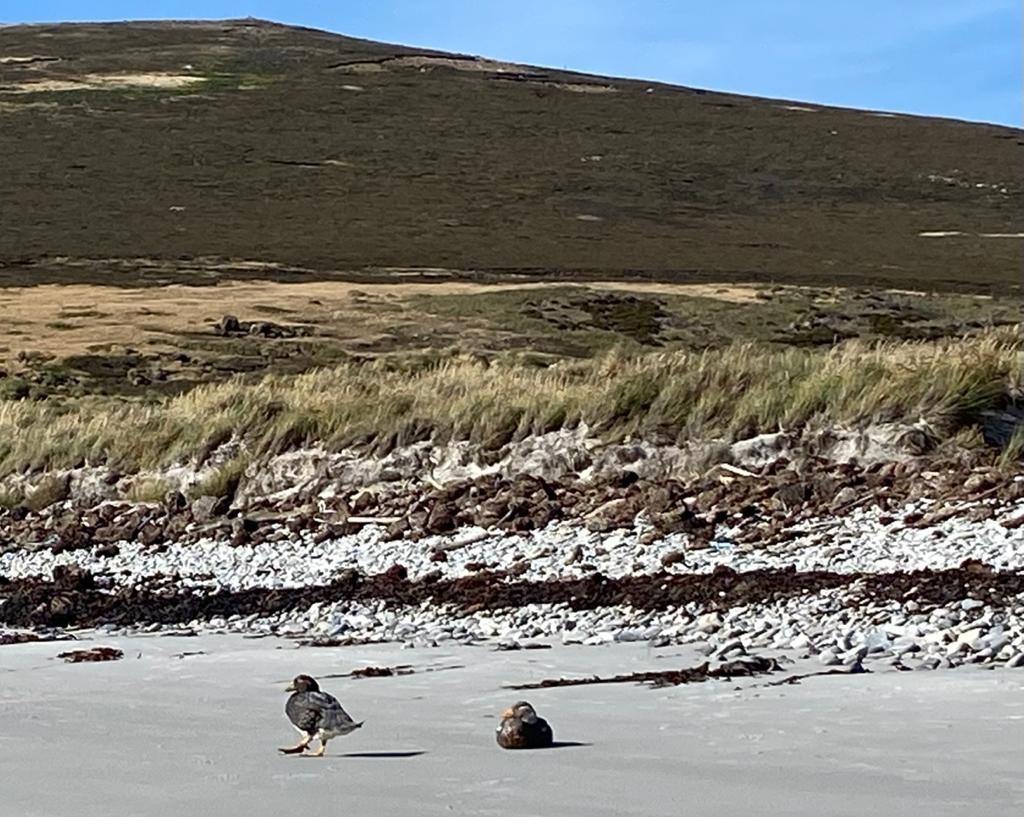
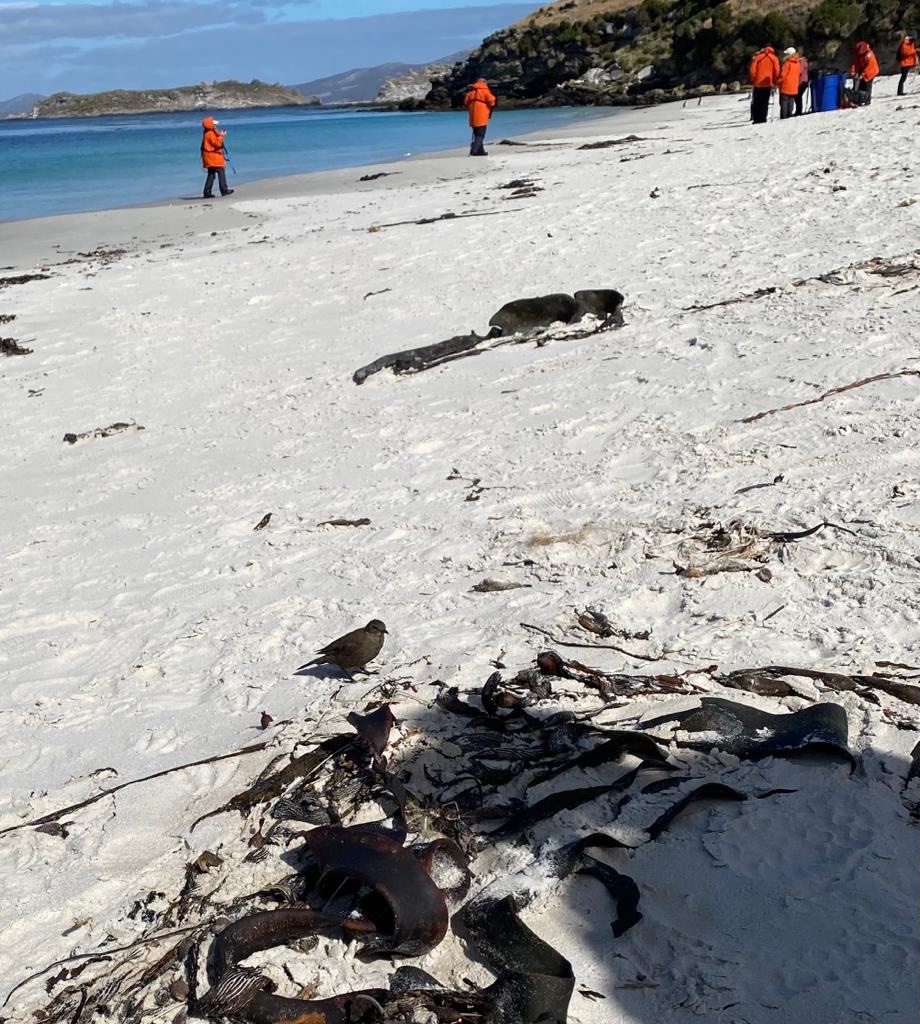
We walked across the island to another beautiful beach that had steamer ducks and oystercatchers. We were able to get fairly close to see the birds before they felt threatened. The beaches here are littered with plastics of many shapes and sizes as well as large sections of fishing nets. Every storm brings more garbage. It’s sad to see.

After dinner, there were 2 auctions. One included items from South Georgia (a penguin scarf, whiskey glasses, a small decanter engraved with an island chart, a silver albatross pin…) this part was to benefit the South Georgia trust to help keep the island maintained at the Grytviken port. It was crazy fun. There was some wild bidding but Bev did manage to get a Penguin statue with polka dot rain boots. Very cute.
The next auction was to benefit the crew fund to aid them if they have a family emergency or to buy items for their entertainment. Several flags from the ship were auctioned and suddenly Mark added a 2 week trip on Friendship 4 for our Newfoundland cruise this summer. So far, he is negotiating with a few people to see if they can work it out to fly in and out if St John’s. Proceeds will also go to the crew fund.
 The Adventures of Anne